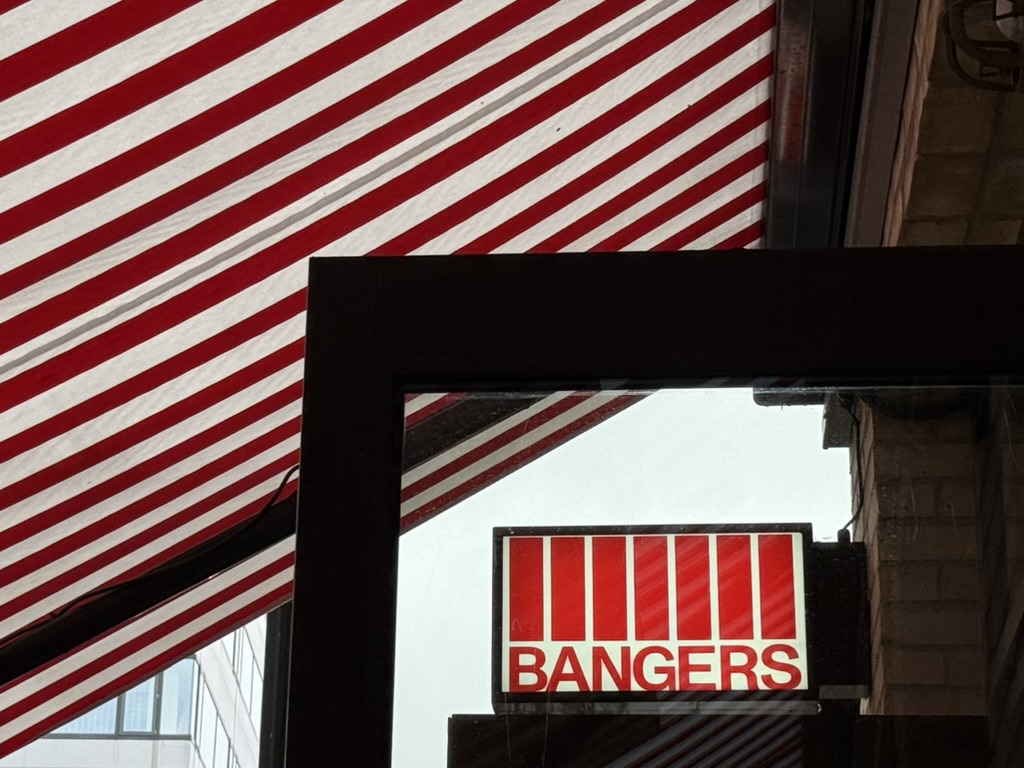
I’ve seen Westminster Abbey and Parliament. I’ve watched the changing of the guard at Buckingham Palace, had proper tea and done a few of the standard London “to-dos.” It was all neat, and I recommend it.
But this time, I wanted something different. So, that’s what I told my travel agent, ChatGPT-plus (or, as I like to call it/him/she/they, “Chadt”).
London would be the first stop on an 11-day trip through the UK: Land in London, de-jetlag a few days, take the train to Edinburgh, see the sights there, explore the highlands and eventually return to Edinburgh to fly home.*
I explained the plan to Chadt in a detailed prompt and described Dave and my interests, things we wanted to avoid, and a little about our personalities. I was sure to say “please” and “thank you,” because when AI takes over, I want Chadt to remember I was kind and polite, and maybe it/him/she/they will be a more merciful master.
Interests: Arts scene, artist vibe, live music, good authentic food, pubs, off-the-beaten-path cultural experiences, blues, jazz; a little gritty but not unsafe; mid-priced hotels, walkable.
Avoid: Predictable, normal, expected London tourist experiences; tourist traps; high-end shopping areas. No Tower of London or Madame Tussaud’s.
To my delight, Chadt recommended the exact location for our London “home base” and several specific establishments recommended by my good friend Mary K., who is super cool and had recently been to London with her super cool husband. Well done, you, Chadt.
Location: The Shoreditch area in East London in the Hackney Borough. Cool-scene, creative vibe area. Known for excellent nightlife. If you’re looking to be close to the “regular” London spots, this ain’t it, but you can always take the Tube. And depending on where you’re going, the walk will do you good.
We had a blast researching all the places we’d go in the area, and a few further out. And we’d check out all the speakeasies and blues bars at night!
Here’s the reality of travel. You have to be prepared to pivot.
Let’s start with my silly idea that we’d wake fresh-ish from sleeping on an overnight flight, easily land at Heathrow at 1:30 p.m., grab a cab, check into our hotel and be exploring or at least having a pint in a pub by 3:30. (I had even envisioned sunshine, for Pete’s sake. What was I thinking? I’d been there in late October before and knew better than that.)
Reality: It was a bumpy ride over a massive seasonal storm blowing its way from Ireland to Scotland. I slept well-ish, but poor Dave had not. We landed in London like stupidly stunned deer. And when we finally emerged outside, it was cold, gloomy, and raining. But we were excited, and I scored us a proper London black cab.
We could have taken the train and saved a gob of time and money, but I’m glad we didn’t. The traffic was horrific, and I’m pretty sure our driver, who was an excellent narrative tour guide, was taking us for a ride, but because of it all, Dave got to see pretty much ALL of London’s most famous spots: Big Ben, the London Eye, Piccadilly, Trafalgar Square, Westminster…
As we got closer to our hotel, the Maldron Shoreditch, the driver imparted more wisdom upon us: 1. We were in an area where the show “Slow Horses” is filmed (cool). 2. The Old Spitalfields Market, covered food/art/stalls, was being re-done and most was closed (not so cool). 3. Our hotel was pretty much on the outskirts of the artsy part of Shoreditch and more in a tech area, so it would be pretty quiet on the weekend (turned out both not cool and cool).
But we passed loads of neat-o places we wanted to check out. And when we saw the Spitalfields Market (encased in construction zone material), a queue stretched along a side. The driver explained it was likely for one of the nightclubs—so we knew the happening scene was still happening nearby.
By the time we got checked in it wasn’t just raining, it was dark. We were feeling the heavy grog of jetlag and knew we’d better get outside. It was only 4 pm! Plus, one of us (me) was getting hangry.
Dave had scoped out a pub right on the corner, The Fox, so we weren’t long in the rain and soon had the first of what would be many of the trip’s pints and half pints of ales and ciders.
A little bit about British city pub culture. Above all, it’s fantastic.
Like pretty much everywhere in the world, the local watering hole is where folks stop by to unwind after work or to meet up with friends to celebrate, catch up, commiserate or pre-game before a night out.
In many London pubs, you don’t sit at the bar. You might lean there, but you don’t park your arse on a stool. There’s no room for that. The bar is where you order drinks and food. Also, the bartenders are usually too busy to gab, but they’re happy to give you a suggestion on a local beer if you tell them your taste! Most pubs serve food, but you order it at the bar. You just tell them your table number, and the food is delivered there—but there’s no “table service.” And you pay as you go, not through a tab.
Two things we learned at The Fox: UK ciders are sweet (I likey). Anything served in a bun is a “burger” (fried chicken breast, slices of beetroot, even breadcrumb encased halloumi logs—which we forgot was the case later in the trip when one of us ordered a halloumi burger). Anyway, The Fox served us some delicious chicken wings and garlic fries, warmed our dispositions with fermented beverages, and made us feel better.
From there, we plunged back into the dark drizzle and tried to interpret our Apple navs to the next stop. But we were a little mixed up. I’m not sure how it happened, but in our confusion, we wandered onto and through a TV or movie set mid set-up. Everyone was super nice about it, and no one shooed us away. They just asked if we were having a nice afternoon and wished us well. Wonder what it was. It was a huge production with blocks and blocks barricaded off, which we had casually ignored.
I’m not going to tell you about every pub we went into, so don’t worry. It would bore you, and the internet would run out of room. But on this strange, jet-lagged, fever-dream of an afternoon/night, we found our waterlogged selves at the next place Dave had on his radar, and we were very ready to get inside somewhere. Anywhere. The place was packed. We could tell it was busy even as we approached. Warm sounds of chatter and laughter (promising). Steamed up windows (hmmm). People clumped up under an overhang near what we assumed was an entrance (uh oh). A peek inside only confirmed it was wall-to-wall with bodies (yikes).
“Don’t worry, I’m not a bouncer,” said a voice under the overhang. “Just push in.”
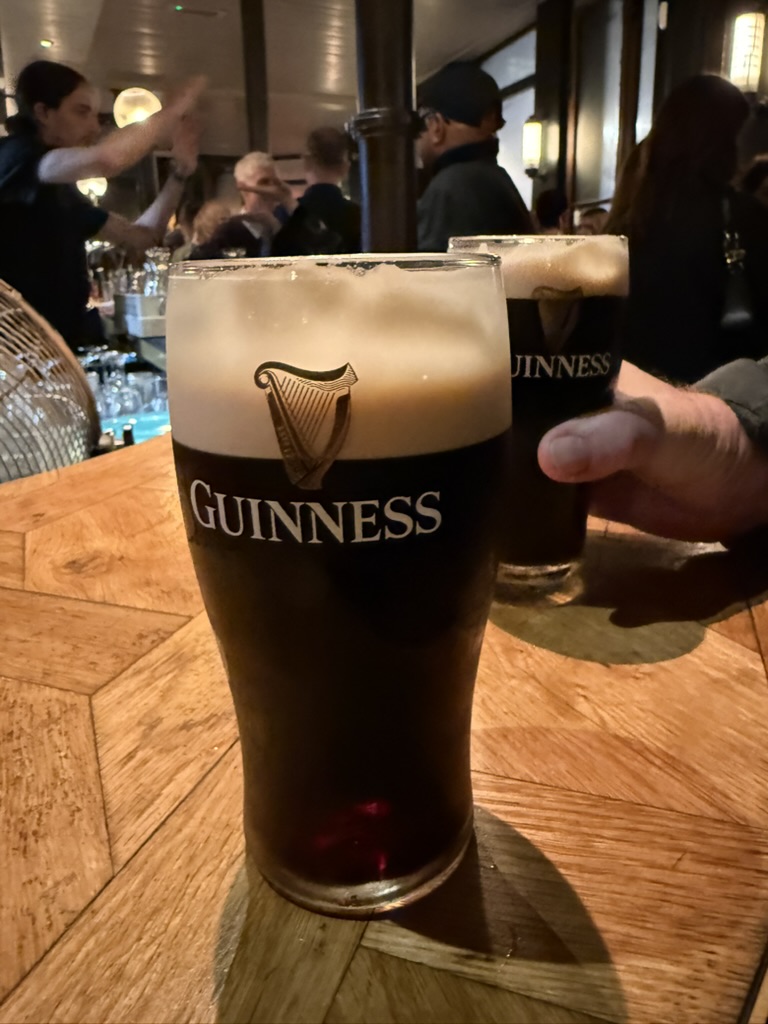
So, in we pushed, into a spectacular wad of chaotic coziness. Friends grouped up around tables and clustered anywhere they could find space. This was the place to be, and while the pub or structure itself was probably hundreds of years old, the vibe and clientele was about two decades younger than I am. A group of ladies reminded me of my daughter and her friends, and it looked like they had met up early to begin a long girls’ night out together.
We wove our way back to a sliver of bar and watched the choreography of bartenders taking orders, pouring drinks, pulling empties into dishwashers, and box stepping around one another. When Adam Driver’s bartender doppelganger made eye contact, we swiftly ordered. We consumed our Guinness efficiently, enjoyed the scene and moved on to another place more suited to GenX and up geezers.
Here are my two regrets about Shoreditch. I regret that our hotel wasn’t a little closer to the “action,” and I regret that I’d underestimated the jetlag. We were so exhausted, we never made it up late enough to sample the area’s famed nightlife.
But what we experienced in London was well worth the sacrifice.
Borough Market and Happy Accidents
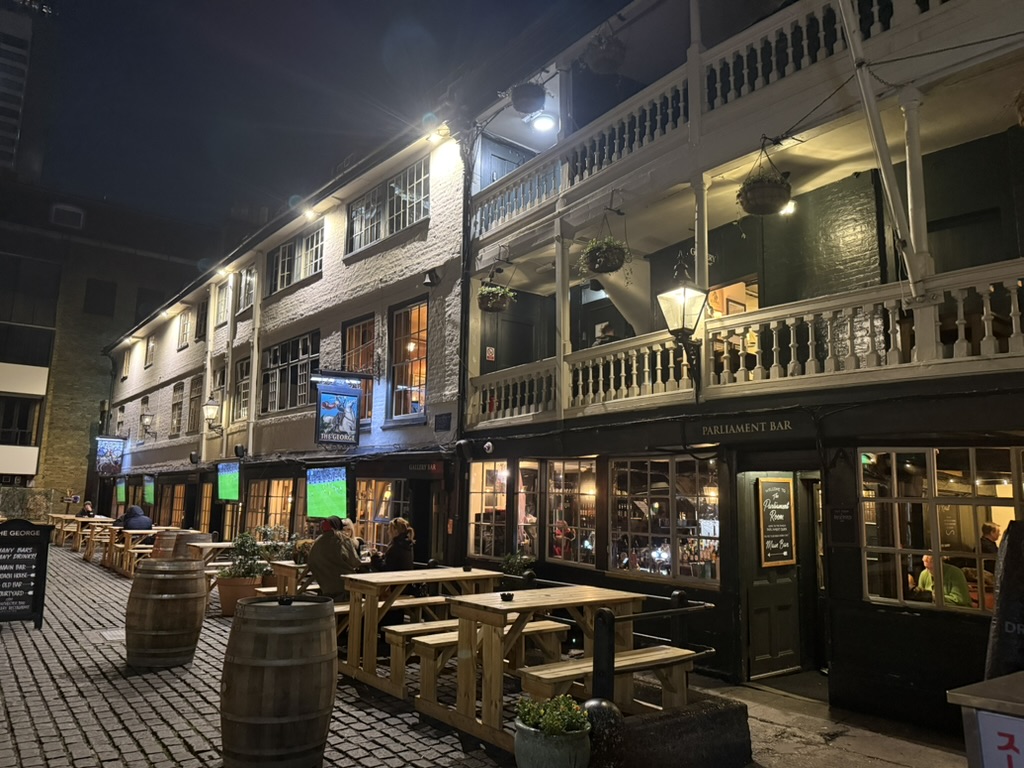
Sunday was my birthday, and my birthday wish was to sleep in, go to the famous Borough Market, eat ourselves silly, wander around that area to see what we could see, and end up having a drink at The George Inn, a very old pub Charles Dickens supposedly frequented.
We did all of this and much more.
Borough Market is a massive wholesale and retail market with over 100 stalls—some under cover and some outside. It’s one of London’s oldest and largest food markets, and it’s legendary for a variety of delicious and high-quality foods. We left for the market hungry on purpose.
Since it was a Sunday, it was maybe a little more crowded with families enjoying their weekend, but it’s a popular place anyway. And with good reason. Everywhere you look, there are gorgeous loaves of bread, shiny nut-speckled pastries, steaming containers brimming with international dishes, and bright fruits and veggies. Everywhere you breathe, it’s a new scent of something you want to eat: sweet cinnamon and rich chocolate; alluring cumin, coriander and cardamom; the tang of yeasty dough; freshly fried fish and chips; savory meat pies.
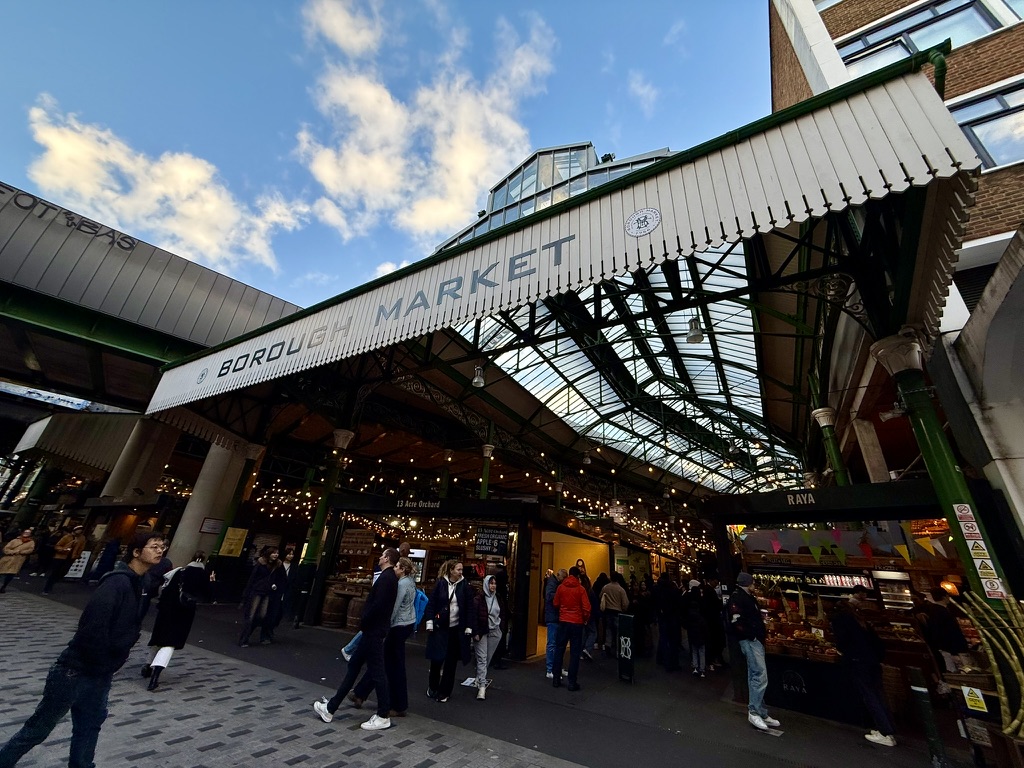
Where to start? We did a slow lap in search of coffee first, spotted fresh pretzels, and took a divide and conquer strategy. I stood in line for two flat whites (espresso with steamed, microfoam milk) while Dave nabbed the pretzel.
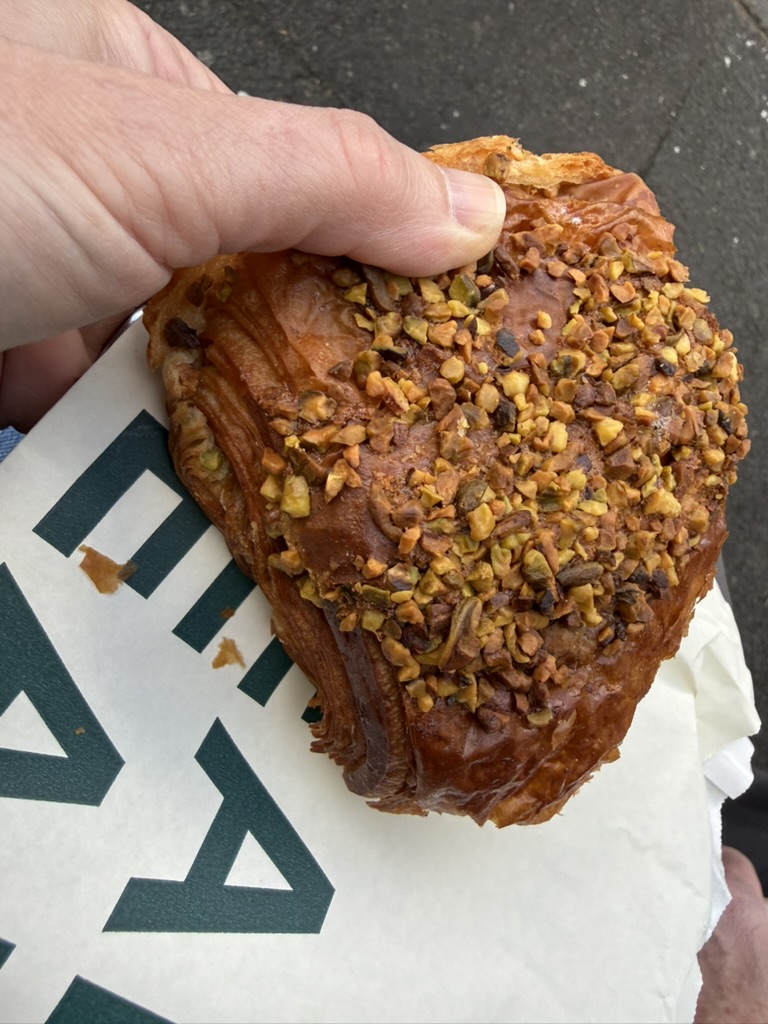
All things are best shared, which we did. We split a delicate, decadent pistachio pain au chocolat pastry from Bread Ahead that was somehow both light and not-too-sweet and also rich with its pistachio-paste-chocolate painted innards. Happy Birthday to me. And, following a good travel rule of “when you see a line at a food stall, it means there’s something good,” I got in one of those for a sausage roll at the Ginger Pig stall. That paid off.
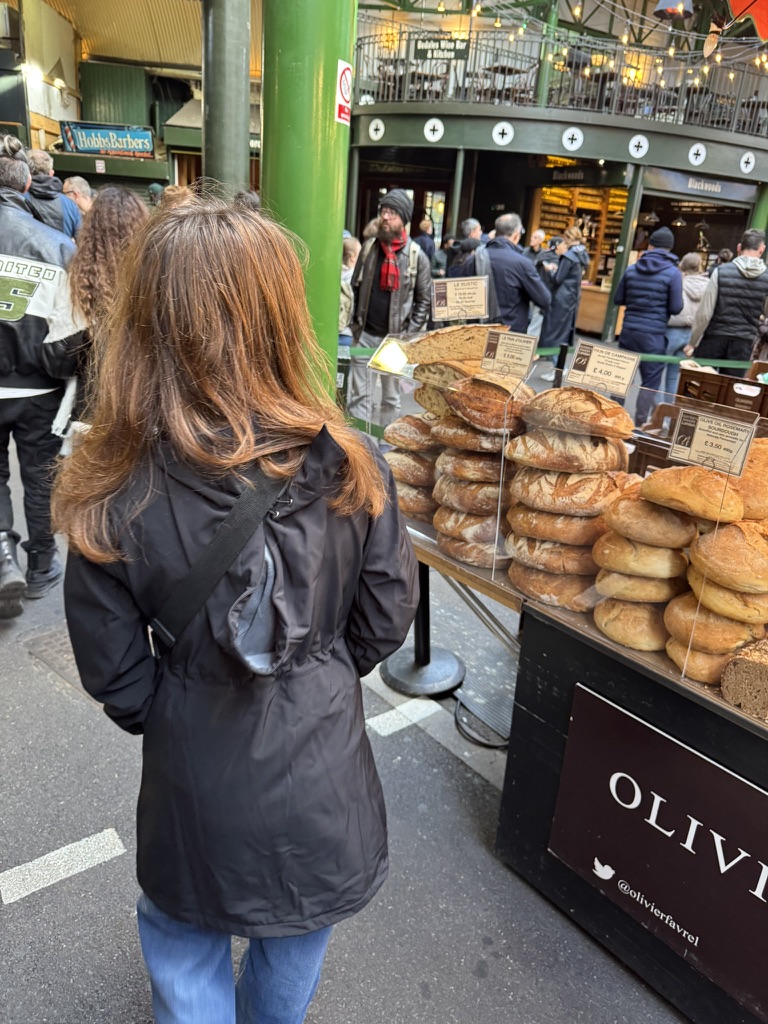
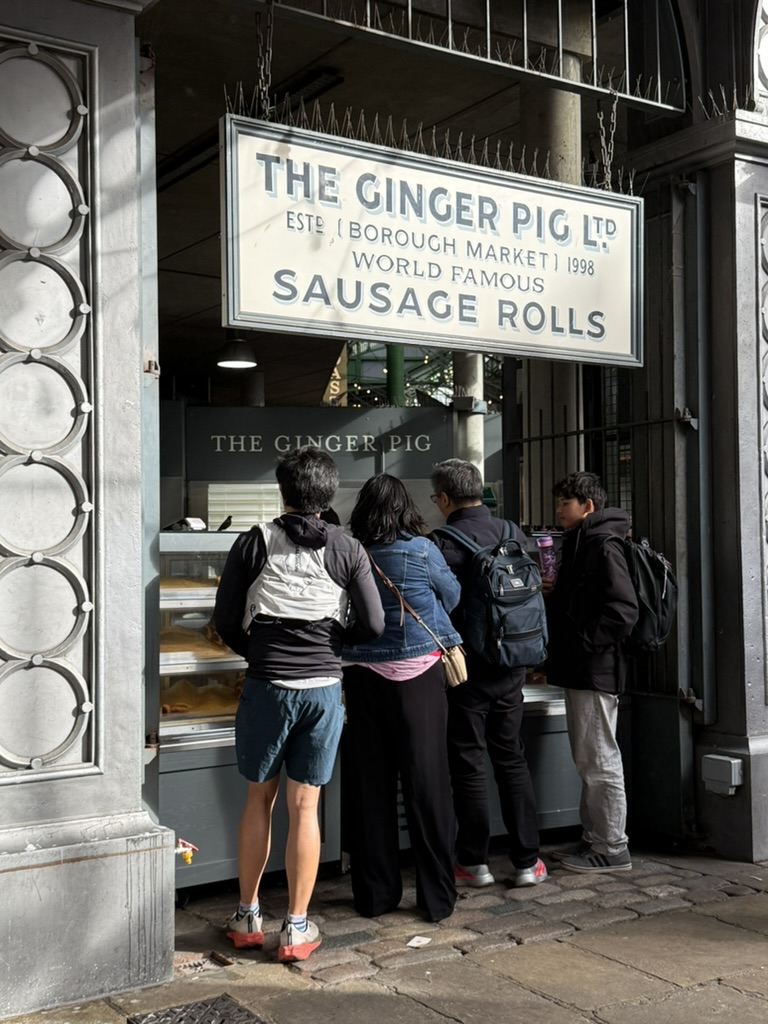
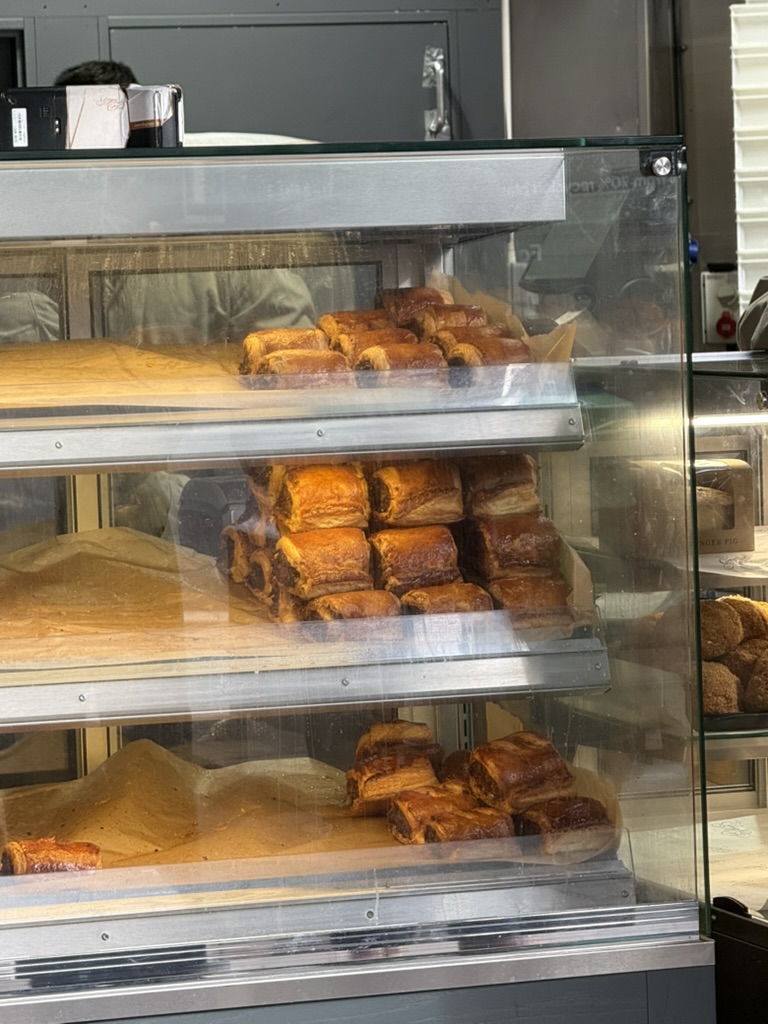
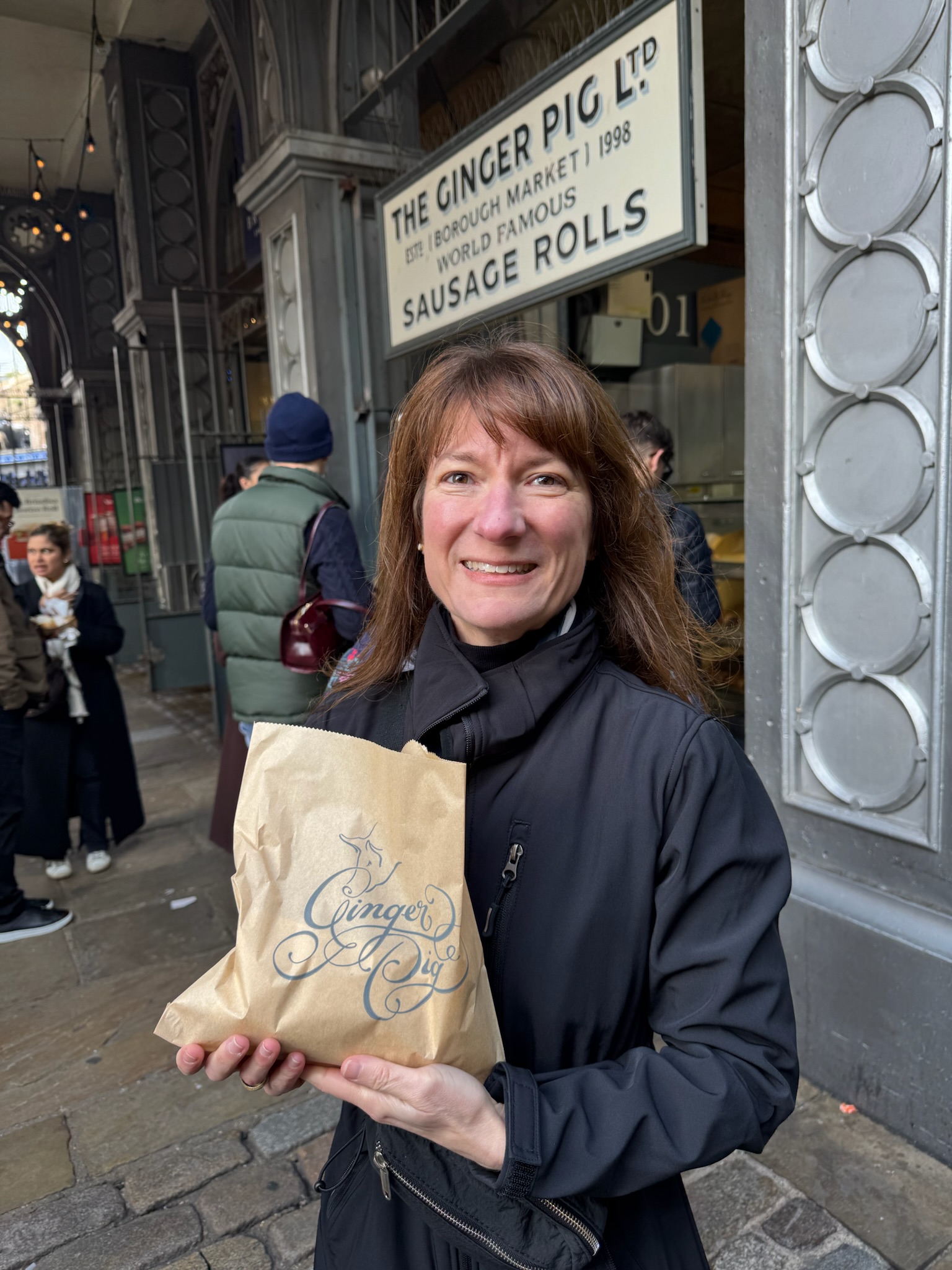
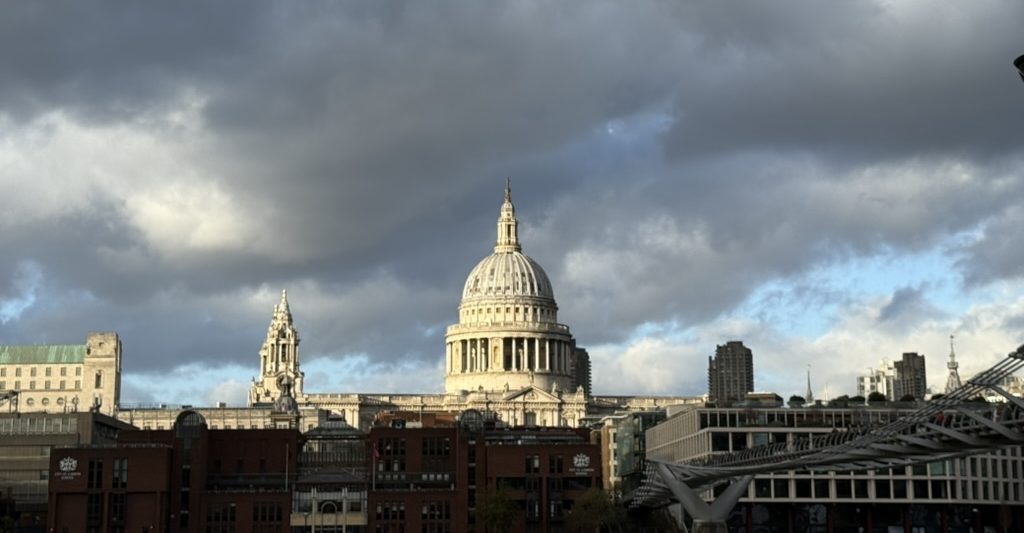
We walked it off, aimlessly wandering off to who-knows-where in search of who-knows-what, wondering at an ancient-ish cathedral and a replica of the Golden Hinde, stopping off for a pint at a pub on the Thames, meandering right past the Clink on, duh, Clink Street, and sort of accidentally ending up somewhere I wanted to see: The original site of Shakespeare’s Globe Theatre.
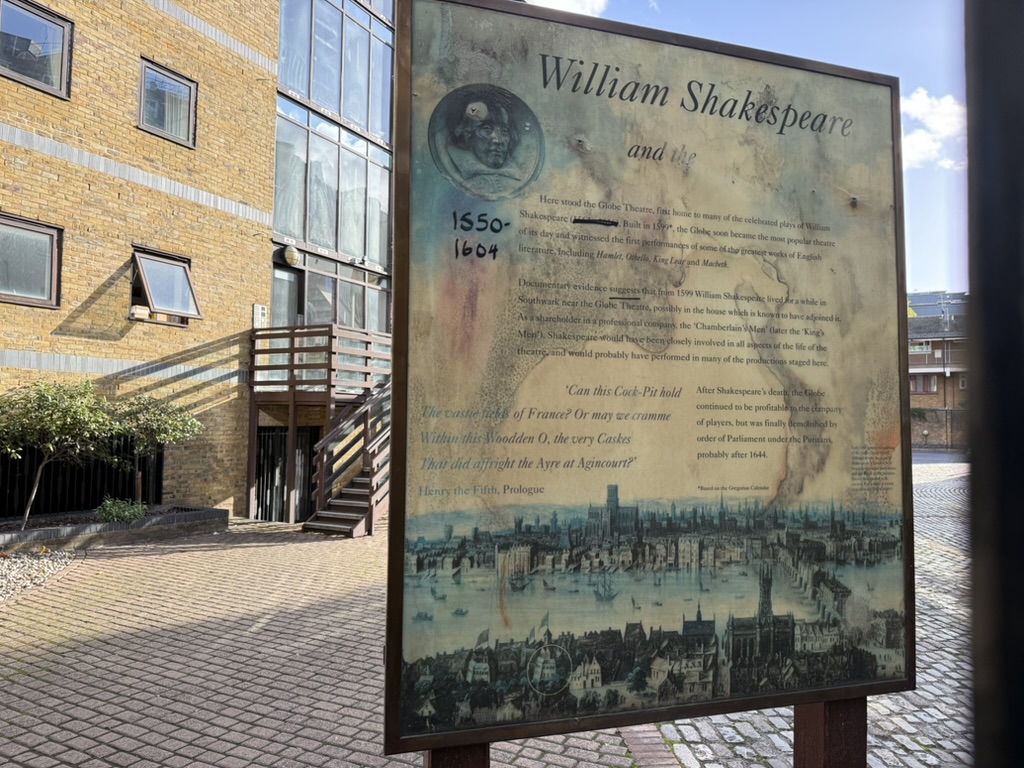
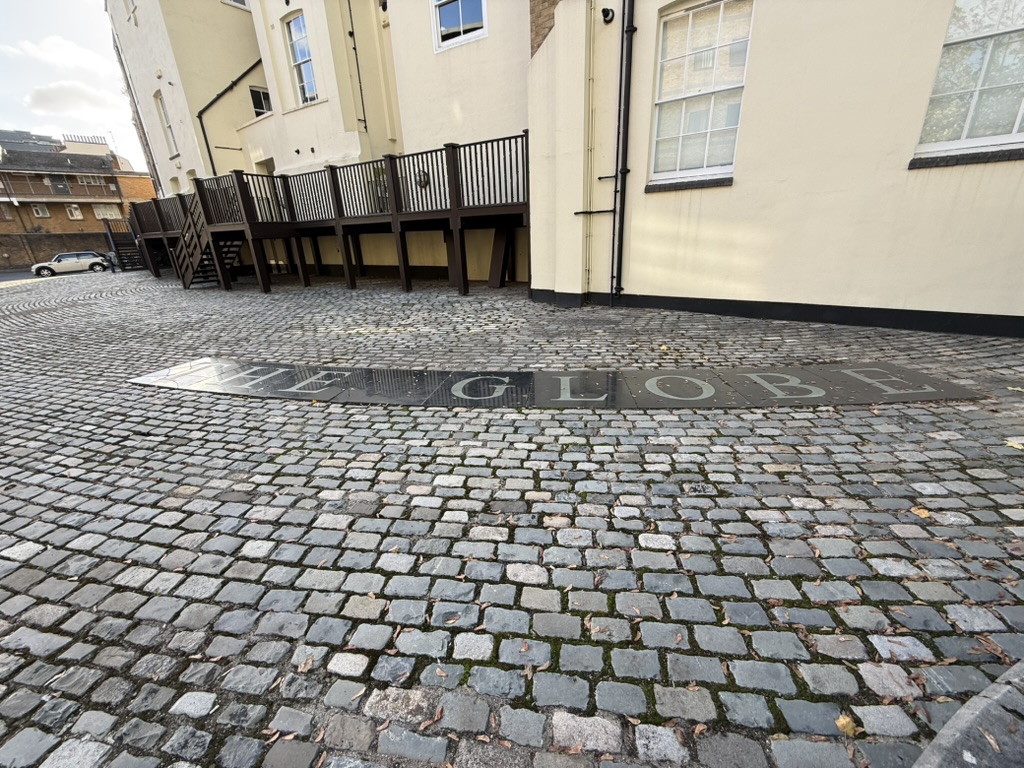
The original Globe Theatre structure was built in 1599 and burned down in 1613; rebuilt, and then demolished in 1644 after the Puritans shut down London’s theatres. The site is now a vacant lot between some condo buildings, but it’s neatly preserved. I appreciated that either a good English or history buff used a Sharpie to correct the dates and facts on the marker. Good on ya.
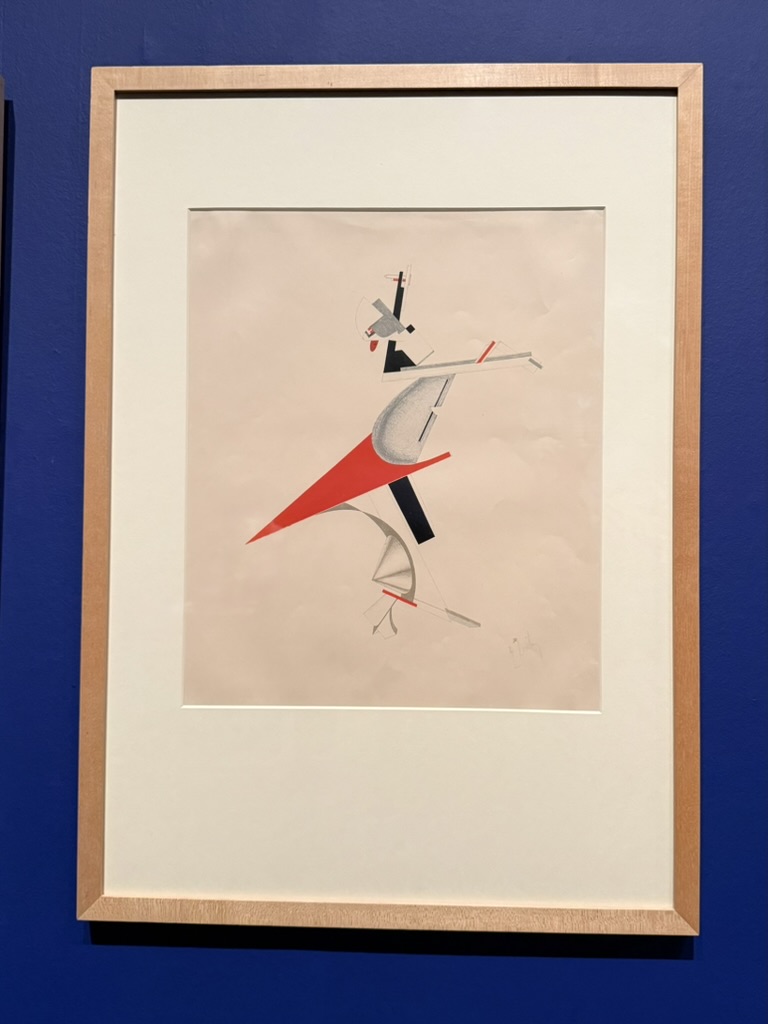
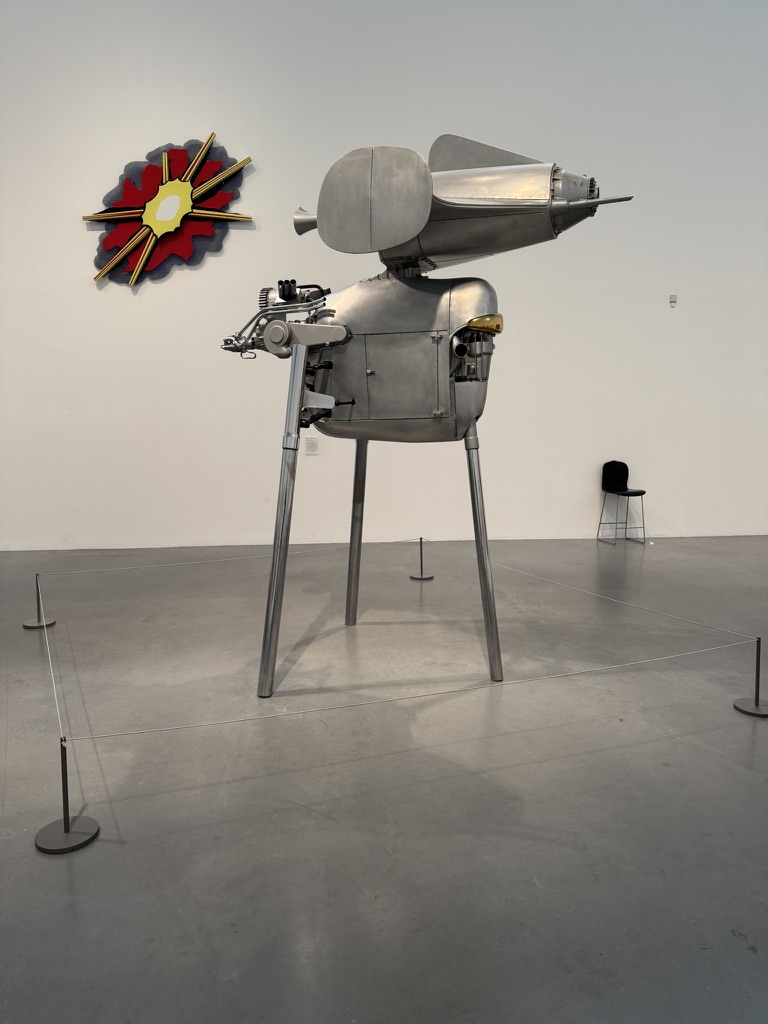
From there we strolled back over along the Thames past the “new” Globe and found ourselves at the Tate Museum of Modern Art. Most of London’s museums are free, as is the Tate, and we didn’t need a ticket. We just joined the fast-moving queue and went in. So much to see. So much to experience. El Lissitzky’s lithograph, “Troublemaker,” from his 1923: Part of the Show Machinery portfolio, particularly spoke to me. I wonder why. We probably could have spent half a day just at the Tate.
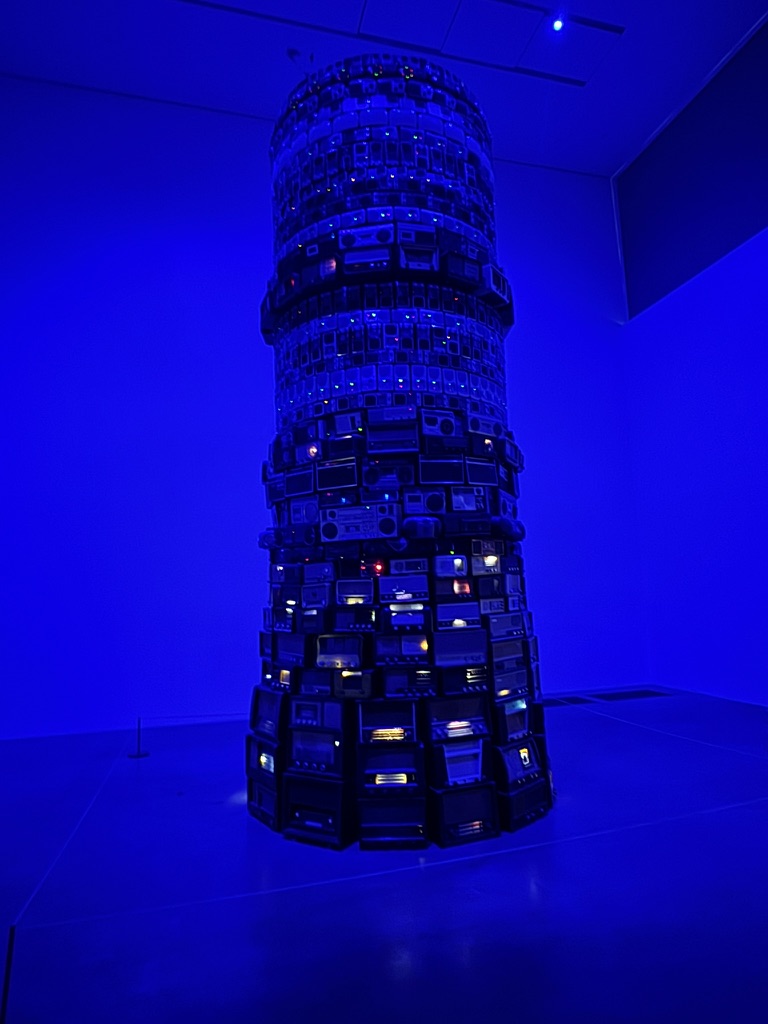
But we needed to be on our way, because I’d made a date with Dickens’ drinking spot, The George Inn.
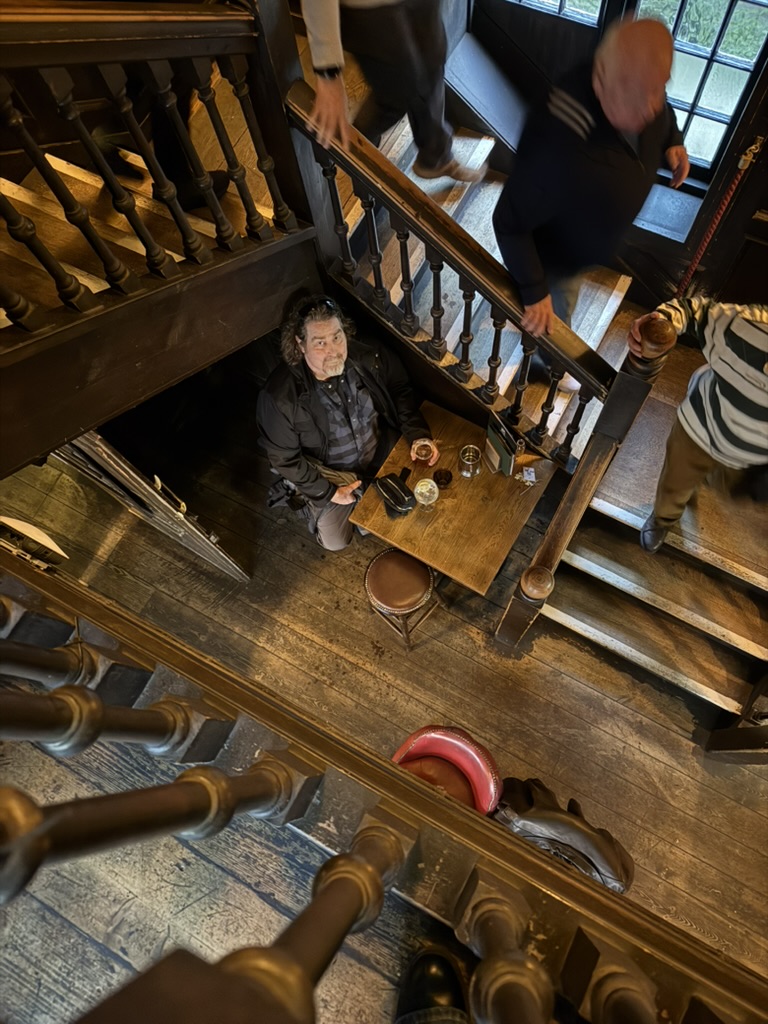
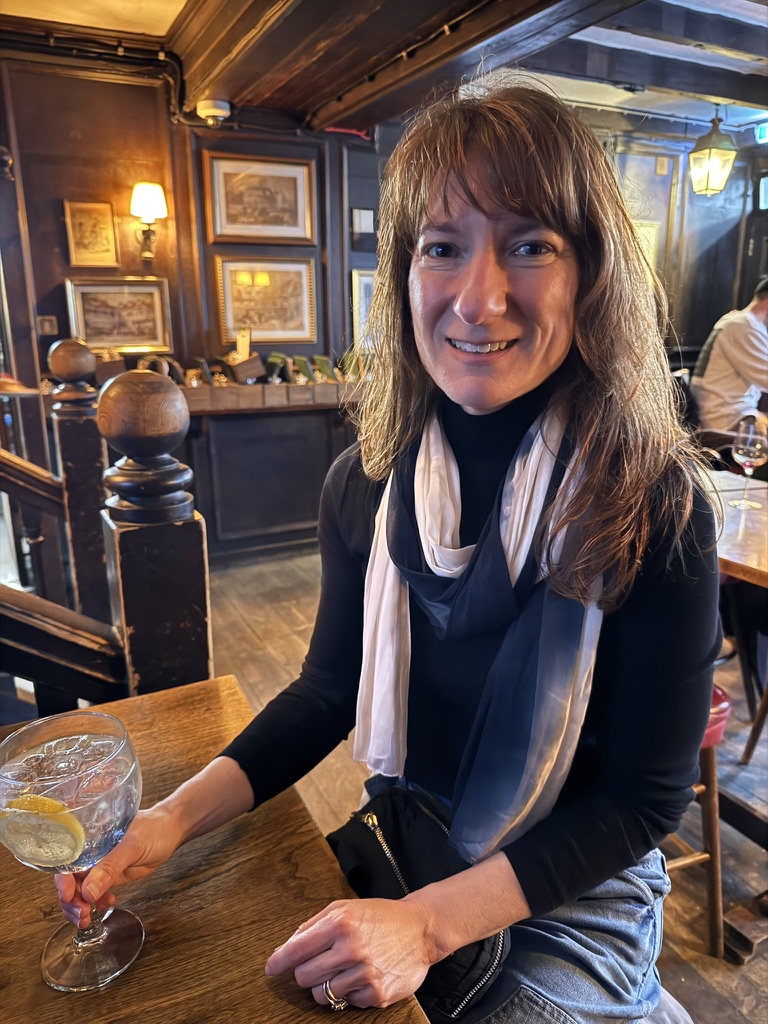
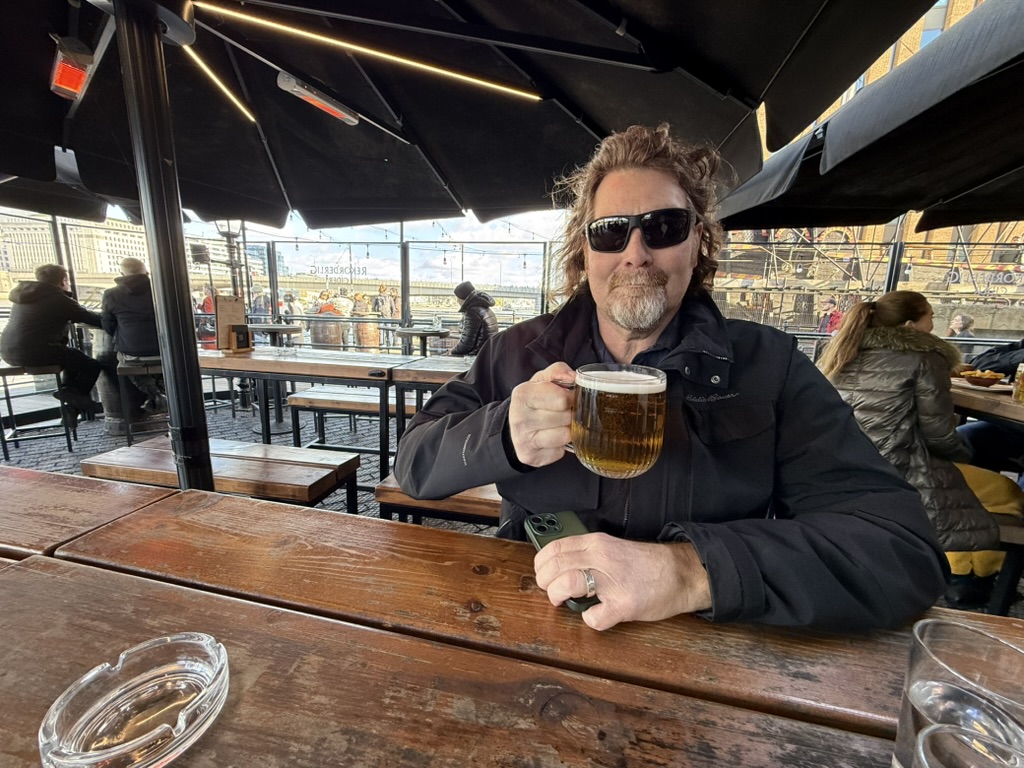
Sorry. Another pub. In lieu of more pub-talk, here are a few photos. I raised a glass of G&T, and I hope if Dickens was inspired to write some of Bleak House at The George, the place gave me a little inspiration, too.
Imperial War Museum
For a variety of reasons, Monday took us to the Imperial War Museum in Lambeth. I don’t think this is on many tourist itineraries in London, but maybe it should be. Be prepared to spend a few hours—and be prepared that there is a Holocaust exhibit that will bring you to your knees.
There are five Imperial War Museums in England, and the headquarters is in London. Exhibits span WWI to present day and are exceptionally well designed and presented. It was a new history lens for me as an American, and especially interesting taking it in accompanied by Dave, who is an artist, designer, and U.S. Marine. He, too, was awed.
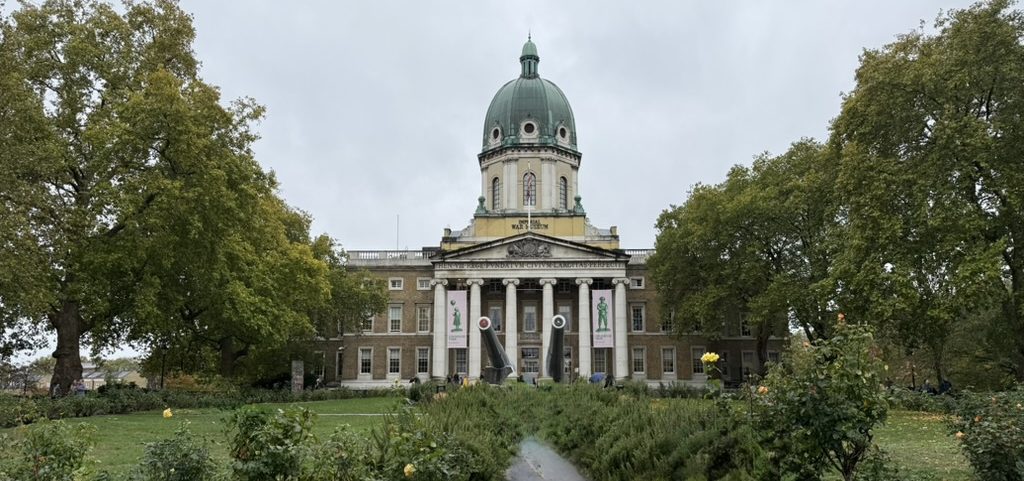
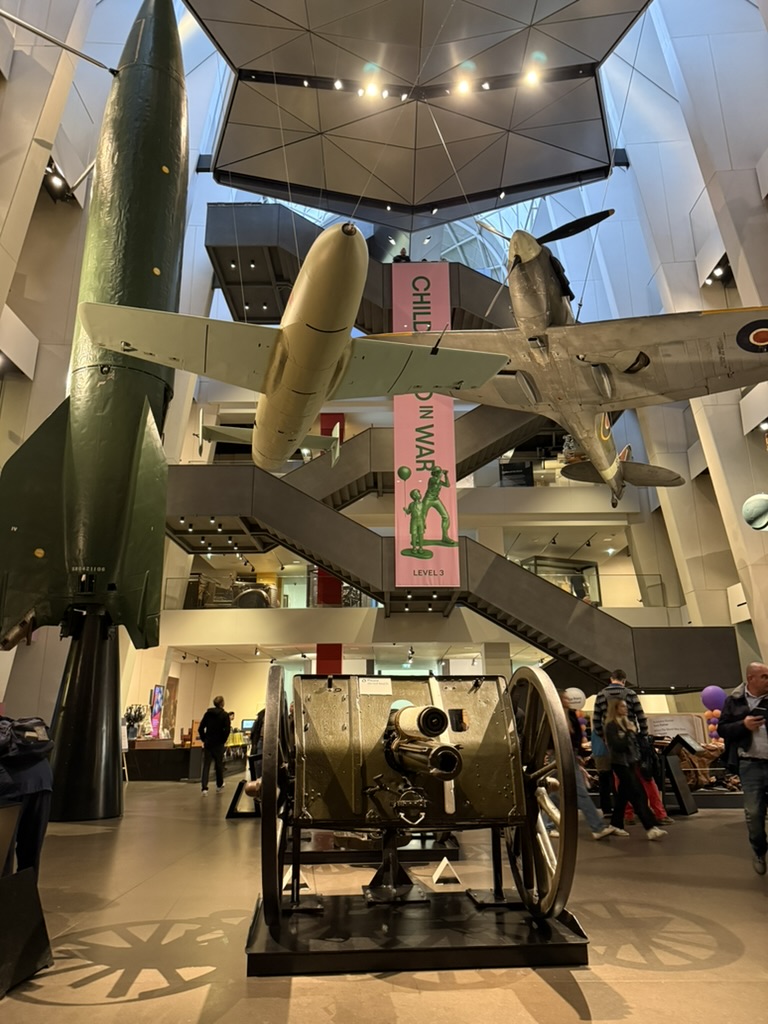
As Americans, we know the history of WWI and WWII, but in our history classes we really pick up educational steam at the point our nation joined in combat. I had read and seen in movies and TV about the air raids, the dreaded warning sirens, and Londoners scurrying to bunkers. But the IWM brought it all to life. It wasn’t just rationing and scarcity of goods. It wasn’t just fear or death from the blitzes or death in combat. There were—and are—other horrific casualties of war.
In the exhibits, I read stories about children sent abroad, evacuated during WWII as part of the Children’s Overseas Reception Board program. I read about the 90 children well-meaning parents sent on the S.S. City of Benares to shepherd them away from the bombings. The vessel was torpedoed by a German submarine, it sank, and ultimately, 77 of the children died. I looked at the scraps of life that mark the time, including a mother’s letter to her young daughter. She’d sent the letter ahead, assuming it would arrive to greet her child. The note, written in tidy cursive, cheerfully and unknowingly assumes the girl has enjoyed her voyage and the crossing. It’s beautifully signed with love from the mother and includes the family dog’s faded pawprint. A heartbreaking letter never received.
I will not write about the Holocaust exhibit only because I can’t do it with the justice and respect it fully deserves. It wrecked me. Again, I learned. I just say “thank you” to the people responsible for putting it together.
Please don’t think the IWM is a sad place. There are emotional elements, but it is important history and very well done. IWM also hosts a collection of film, photography, and art, including works by John Nash and John Singer Sargent. Visit as you would the hallowed history museums and institutes in Washington, D.C. or whatever city hosts your nation’s stories and learn some new things.
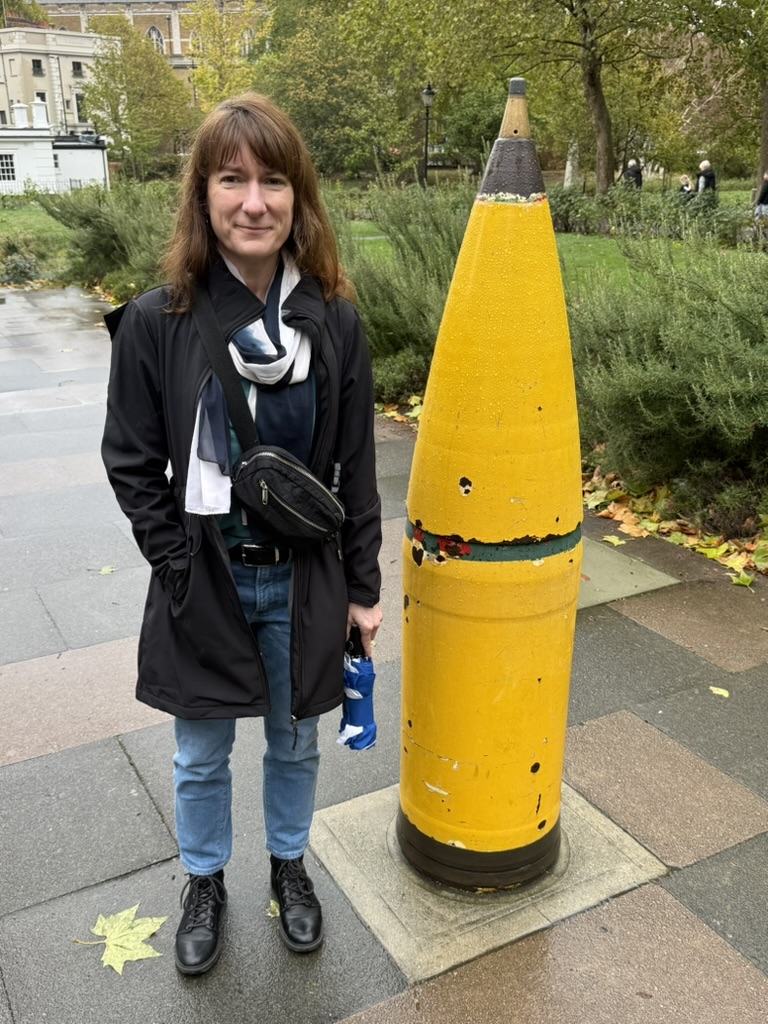
Since we needed to decompress, we walked through a pretty park to a corner pub for a pint and to plot our next move. The Tankard was exactly the quiet, casual environment we needed to regroup. Drat. That’s another pub reference.
Onward. An Uber deposited us near Liverpool Street just north of the City of London so we could check out a fancy cocktail spot a friend from our own local Kansas City watering hole had recommended. It really was lovely, but too pricey for more than a nip. Plus, it was a nice evening for a stroll.
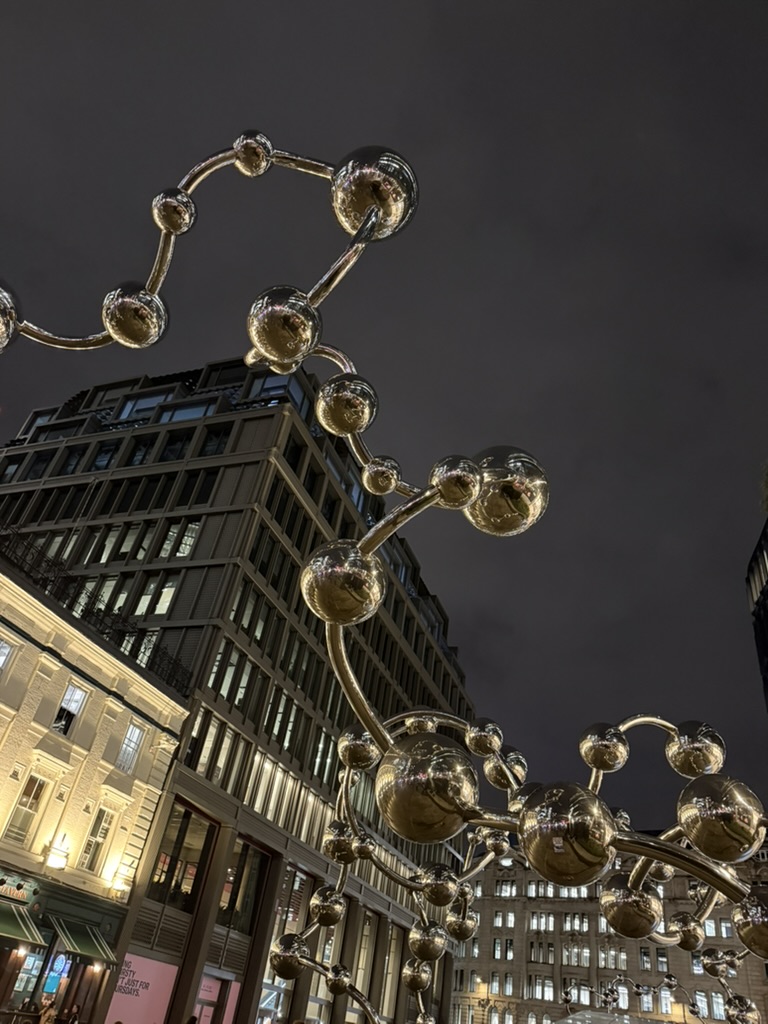
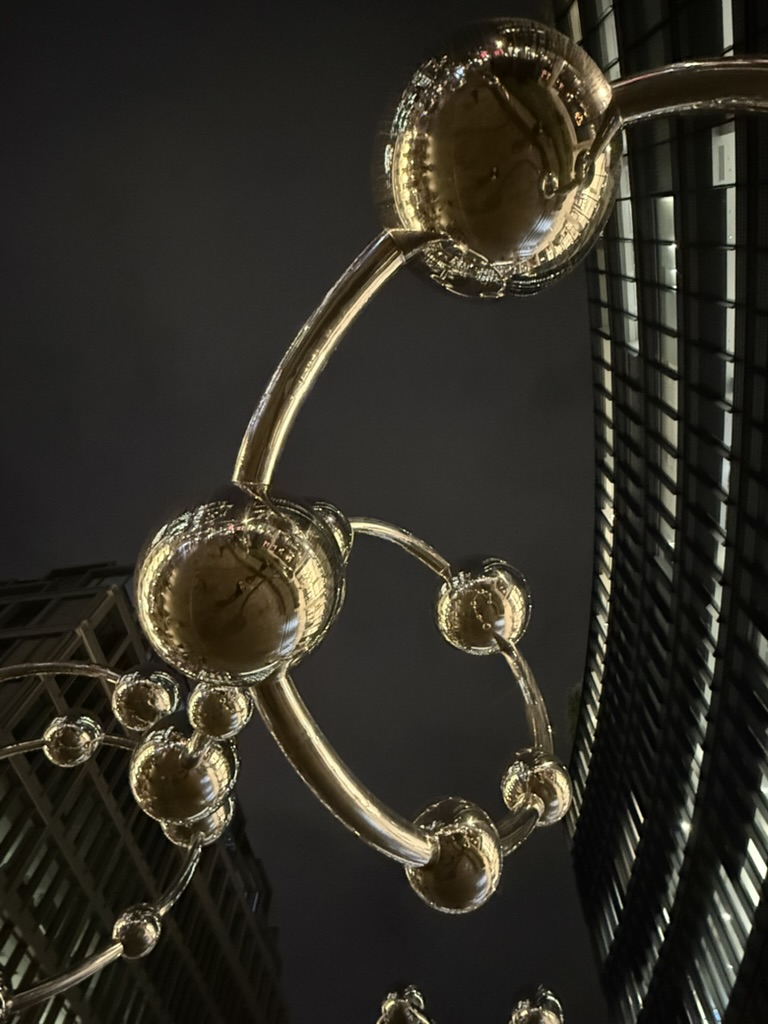
We took a magical walk back toward Shoreditch, appreciating London for its character and characters. Architecture. People. Art. All peppered with surprises. Modern mixed with centuries old. Myriad languages. Sophisticated business fashion, punk, and hot-pink-haired whimsy. Near the Liverpool Street Station, an art piece of big golden baubles looped in sturdy suspension. What can you do but enjoy it.
All too soon, we were back on our hotel’s street and eventually at The Fox for one last nightcap. And an early night—because tomorrow, we’d be on a train to Scotland.
*I’ll be writing about many of these locations, as well as some general insights I hope you’ll find as funny as I did (what’s the deal with the cologne). But just in case you want to know the exact itinerary and time of year for your own planning fun: We left 10/23, landed London 10/24.
London 10/24-10/27
Train to Edinburgh 10/27
Edinburgh 10/27-10/30
Picked up rental car (aka car hire) 10/30 to drive Scottish highlands
Pitlochry 10/30-11/1
Inverness 11/1-11/2
Oban 11/2-11/4
Edinburgh to return rental and prepare for return to KC 11/4-11/5
Fly home to KC 11/5
Chadt was a great starting point for our itinerary, and if you’re thinking of using AI to plan a trip, I recommend it. We made tweaks here and there, but it helped plan a fantastic route and was spot-on with suggestions.

