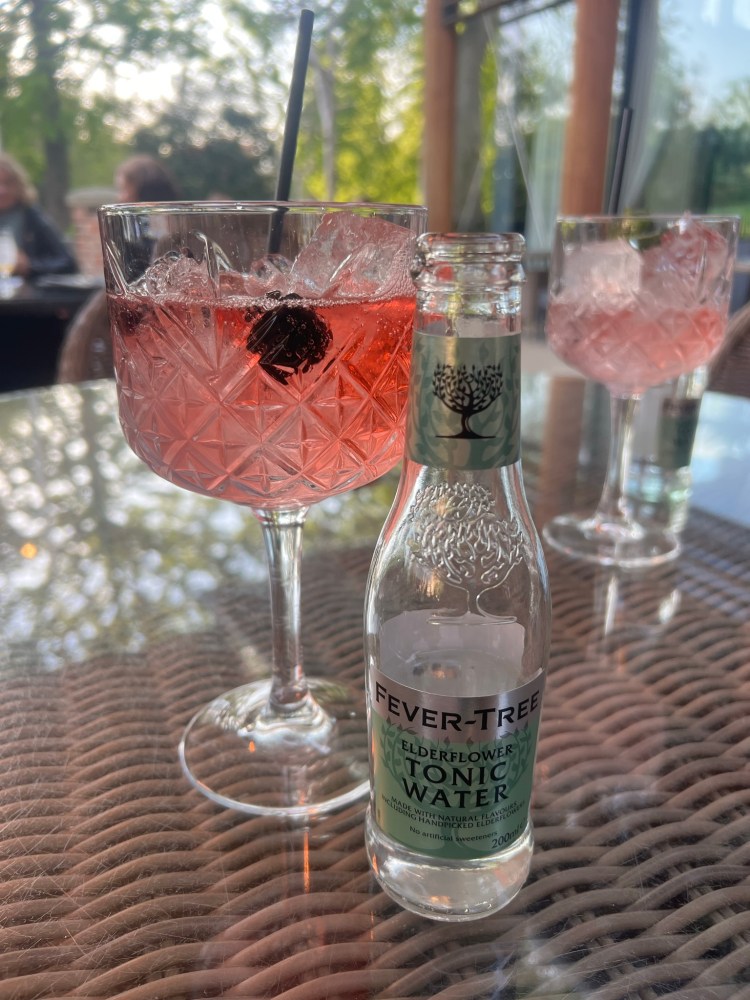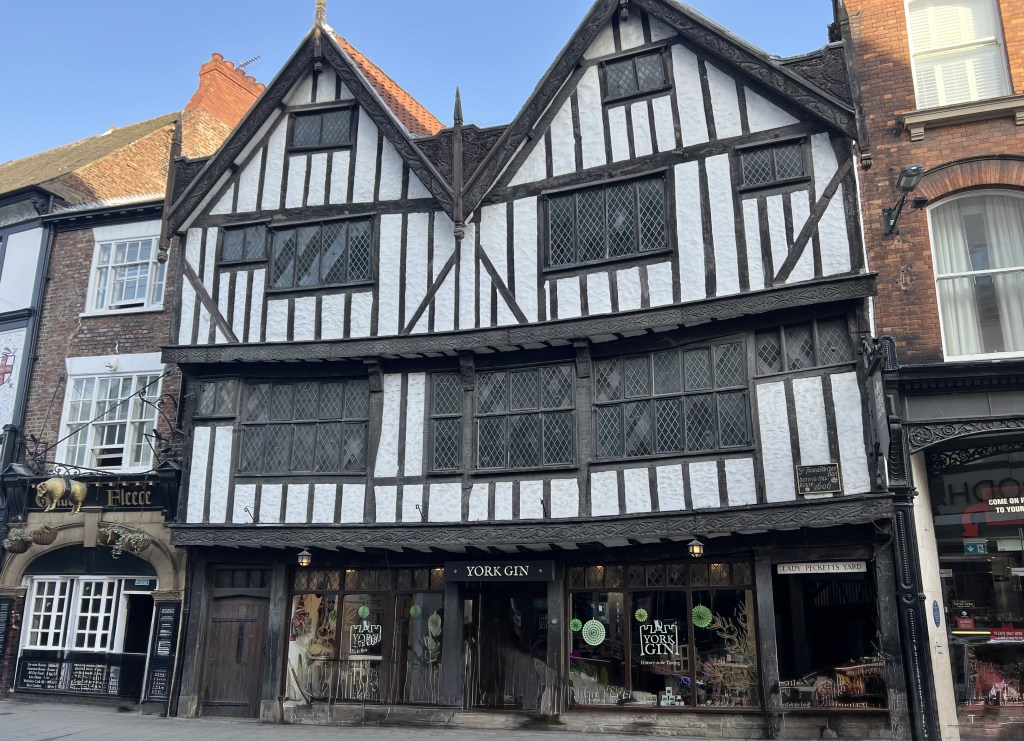
I am a gin girl. So, finding the perfect gin & tonic was a personal mission in my downtime while I was in York. A difficult mission, but it had to be done. York was the right place for the task, and I was up for it. Like much of the UK, York has no shortage of good gin or good bartenders who know how to make a proper G&T.
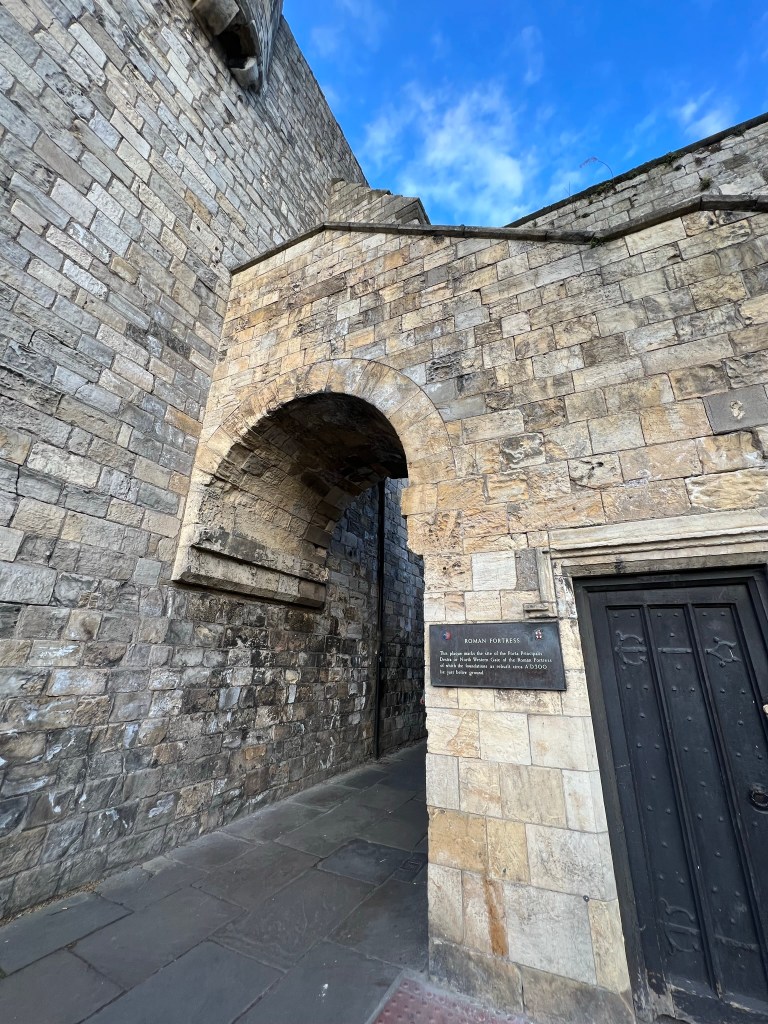
The historic city of York also has an abundance of delightful shops, pubs, restaurants, alleyways, nooks, crannies, picture-perfect bridges and tucked-away parks. It looks like the proverbial quaint village movie set for a Disney film. Except it’s a real place, and I was really there.
So, besides the main mission—gin, obviously—I had a few side quests in mind for my limited time.
The first quest was food. And maybe a better disposition.
I was in York for work, and I’d arrived by train alone at night, hungry and in a sour mood. I needed to handle some business in the morning, so my colleagues hadn’t joined me yet. And now, I found myself roaming the cold, dark, and drizzly evening in search of something to eat, discovering nothing open.
Even with an umbrella and overcoat, as the drizzle turned into honest rain, the chilly dampness seeped right into my bones. It had been a mistake to leave the hotel to begin with, and worse, I’d set out feeling sorry for myself. I rarely feel lonely when I travel, but with some personal life circumstances, the rain, and dropping blood-sugar levels ganging up on me, I could feel the stupid self-pity tears and defeat begin to well.
But thank the damp heavens above for an oasis in the gloom—a light was on above The House of Trembling Madness.
I was glad it was open, not just because I was well past hangry. For the name alone, I had to go in. It was exactly what I needed: warm, lively, and bright. Maybe not a place to order a G&T (or maybe? I’ll never know), but I’d hit the jackpot for a nice pint and something to eat.
The place is a hodge-podge of mismatched rooms, multiple floors, and hallways stuck together all this way and that. After you place your order at the bar, you take your beer, find a seat somewhere, and somehow, your food finds you. That part was a mystery, because after scoping the place out, I chose a table in the basement near a fireplace.
The tables all have tall lit candles on them. Real candles with real flames. Not the fake battery-powered kind that won’t light your pub on fire if they fall over. Wax oozes over the edges, showing their use and wear.
More important on my table: a “small”-portion plate of meat pie, potatoes, and mushy peas, all doused in rich brown gravy and running together like some kind of savory, messy kaleidoscope. It’s not health food, but it’s the stuff to eat when you’re cold and in a bad mood. Maybe it’s British soul food, because I tucked into it and immediately felt better inside and out.
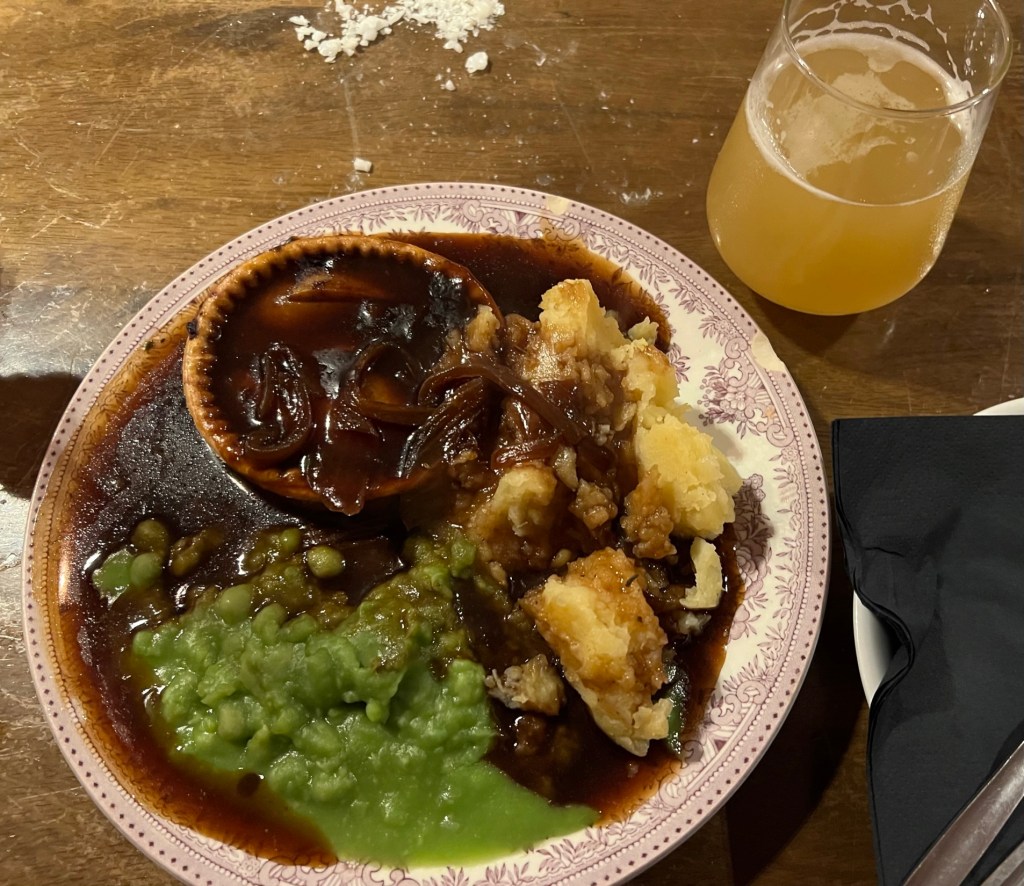
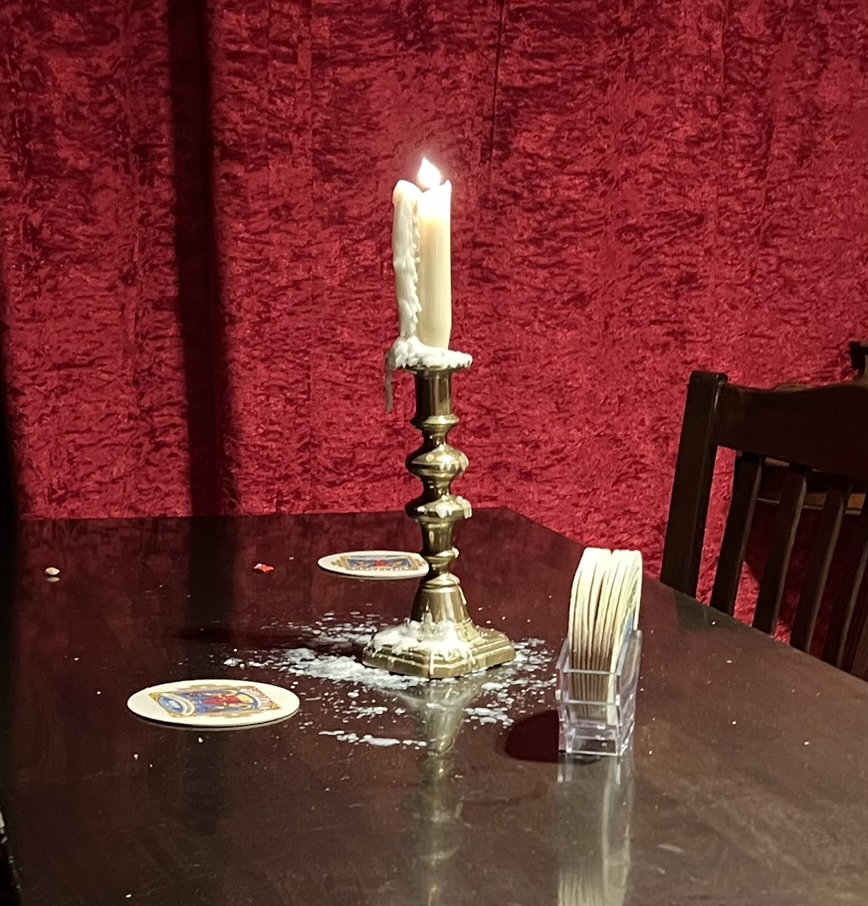
I enjoyed the warm hospitality of the House of Trembling Madness so much, I took my colleagues there. (I also affectionately named my 1908-built Mercier Street house in Kansas City after the place, since the floors all slanted one way or another and everything was askew.)
Since most of my free time began in the early evening, naturally, most of my York side quests began in pubs and included another Yank or two. The Blue Bell is a small pub that advertises itself as a “proper pub for proper people” and has a short set of rules they expect patrons to follow—and they mean it. It’s not a fancy place at all; the rules are just basic respect: No swearing, no large groups (it’s too small for them), no cell phones (take the call outside!), no children. It’s a cozy little place that’s preserved its historic Edwardian-era charm and boasts of having last decorated in 1903.
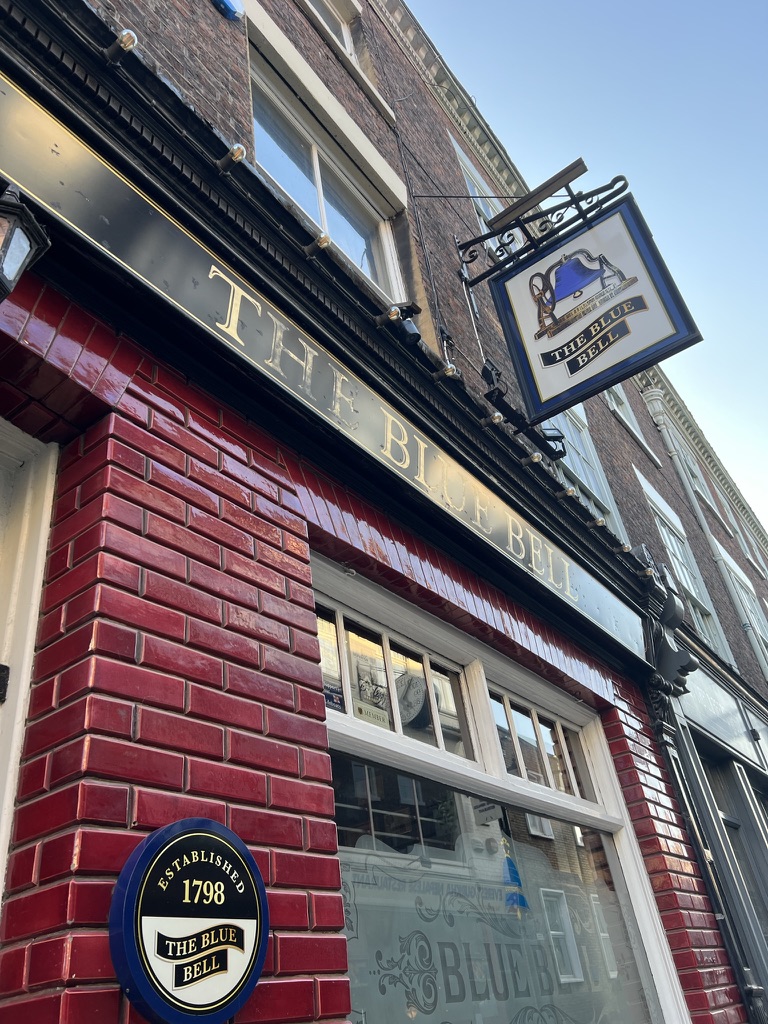
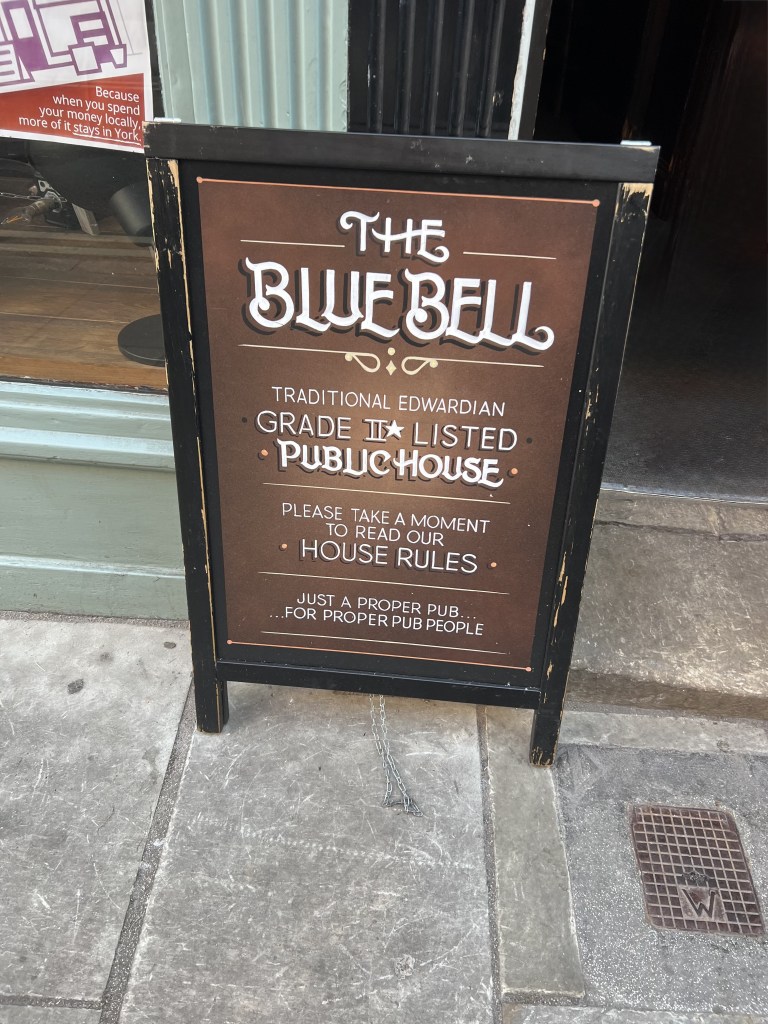
Local patrons chatted us up, as curious about us as we were about them. And while swearing and profanity were forbidden, the locals got a good laugh when they tricked us into using an innocent term that means something quite vulgar in British slang (you’ll have to ask me personally about that one) to ask the female bartender something extremely offensive about herself. Fortunately, she was in on the joke and our “education.”
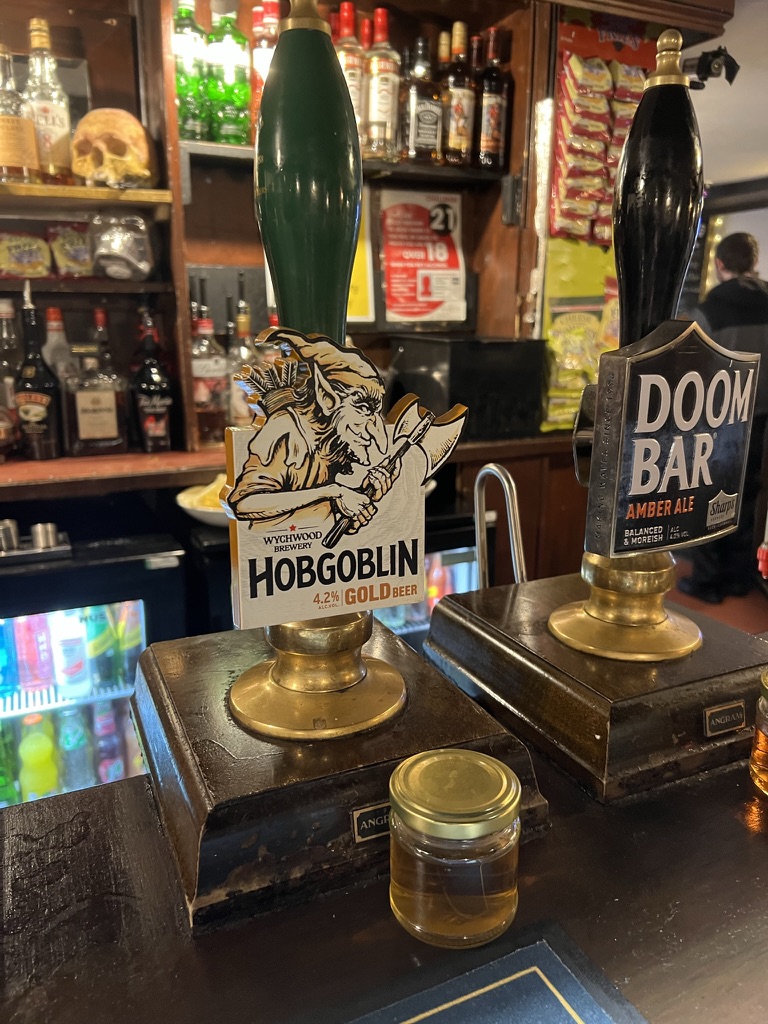
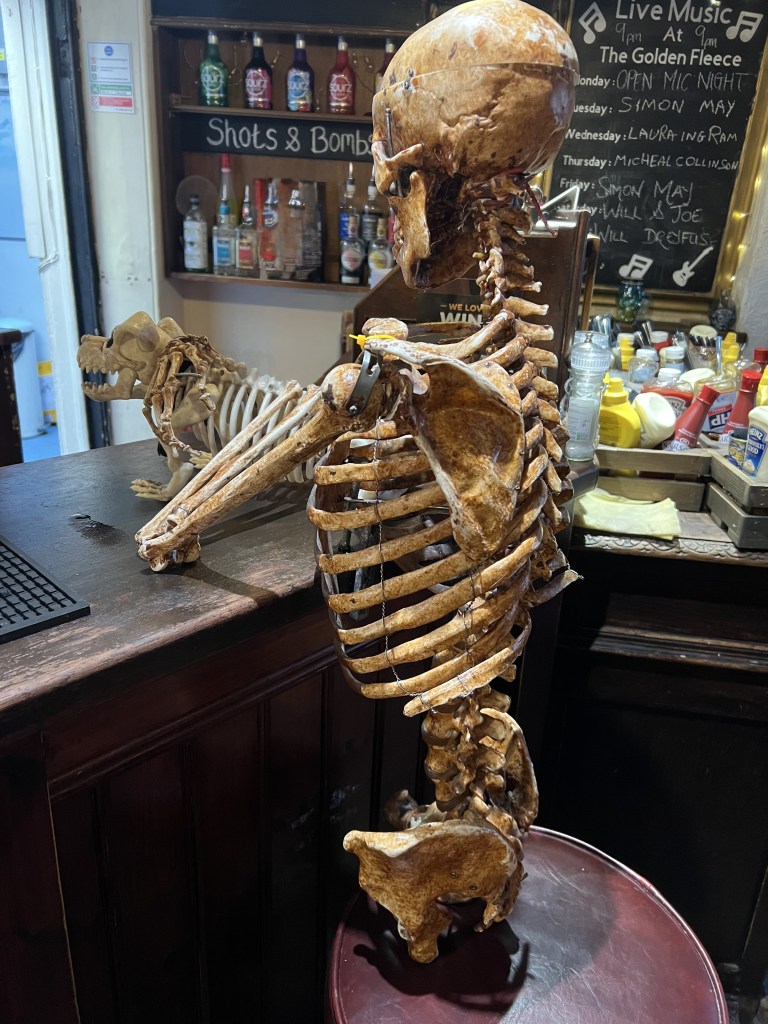
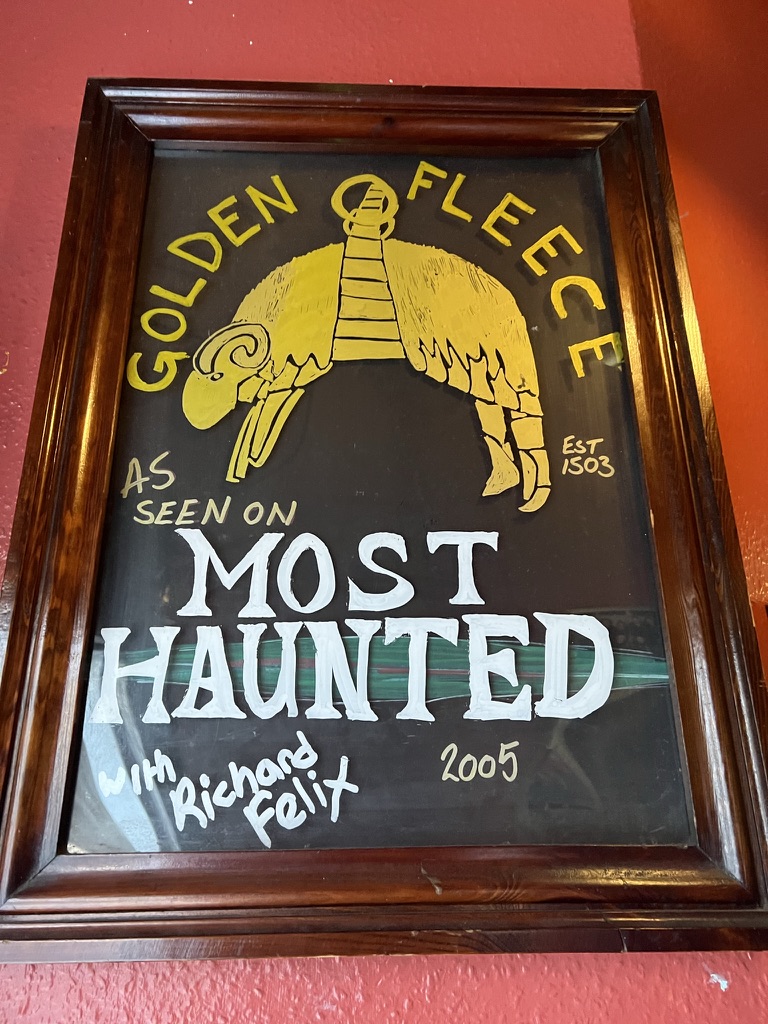
The Golden Fleece dates back to 1503 and claims to be York’s most haunted pub. I don’t know if that’s true, but it was a nice place to stop before checking out the Shambles. They do have Hobgoblin ale on tap and a skeleton perched on a barstool. How can you not like a pub with a barstool skeleton?
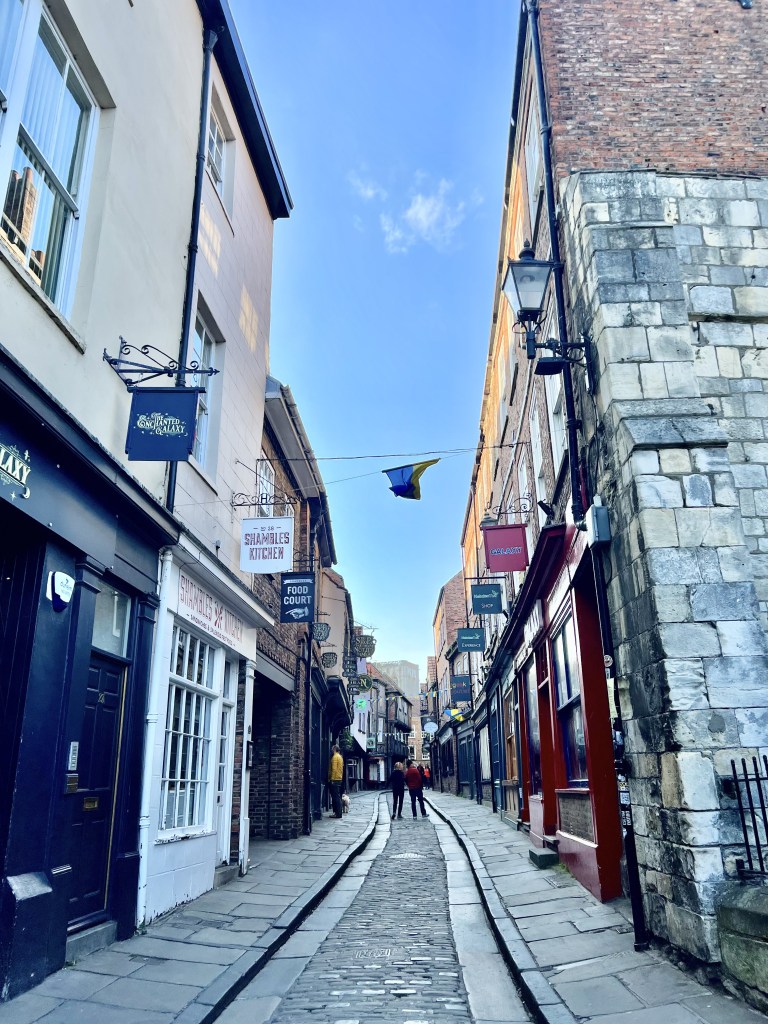
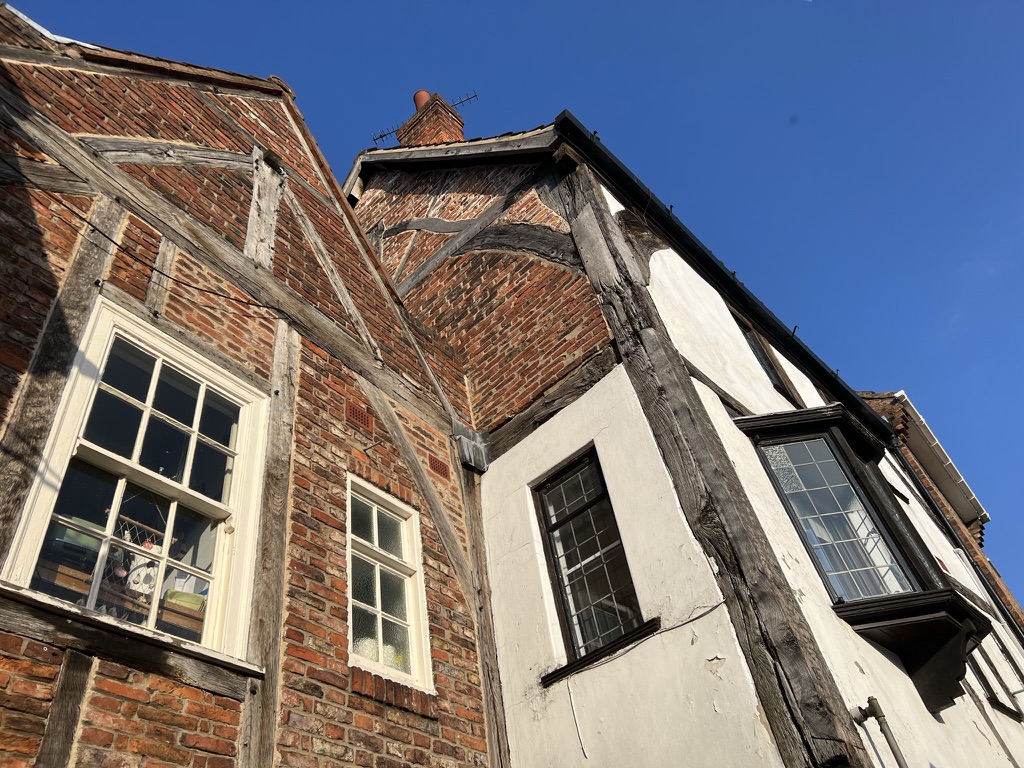
Ah, what’s the Shambles? It’s a narrow medieval cobblestone street lined with timber-framed buildings that have managed to remain standing for a few centuries. Back in the day, as in the 14th or 15th century, it was a sort of open-air butchers’ row. The buildings are now boutiques and speciality shops. Naturally, one is a Harry Potter shop. And speaking of Harry Potter, supposedly, the Shambles inspired Diagon Alley’s look. IYKYK. I took a peek, but most things were closed when I was there.
My spare time side quests in York weren’t just pubs and meat pies. I was lucky to be included in a drive across Yorkshire to Whitby and to see the Yorkshire moors. Besides being lovely places and stunning landscapes, those are important places for an English major. Bram Stoker spent significant time in Whitby, which influenced Dracula’s development.
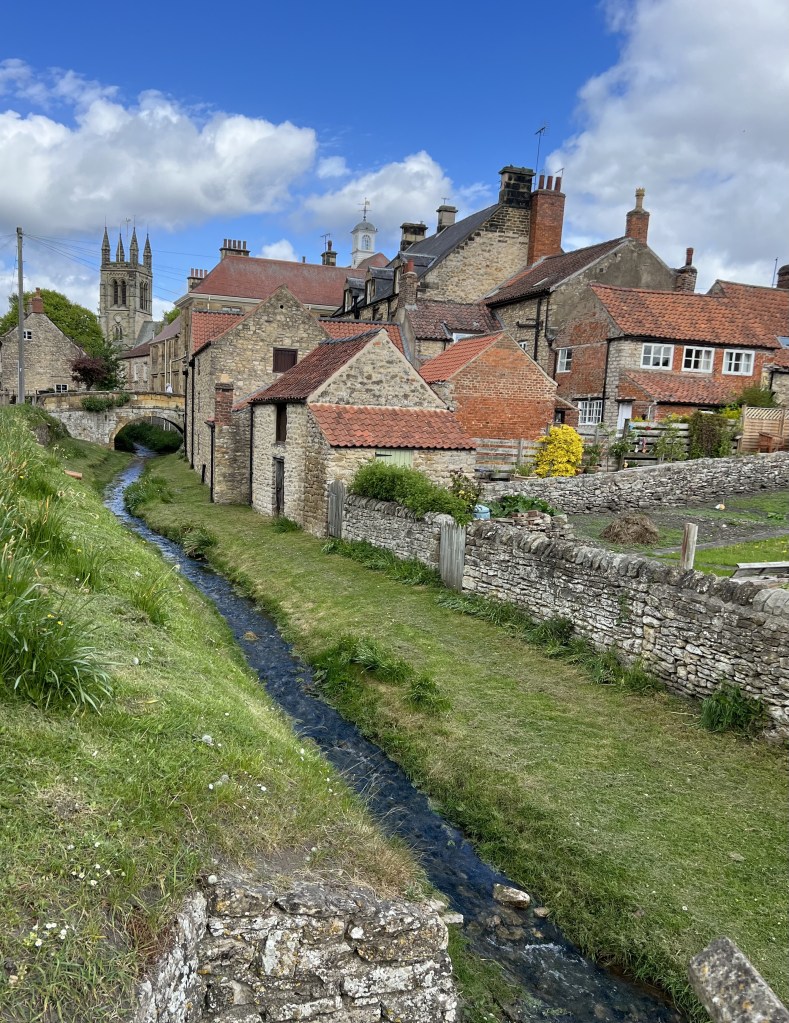
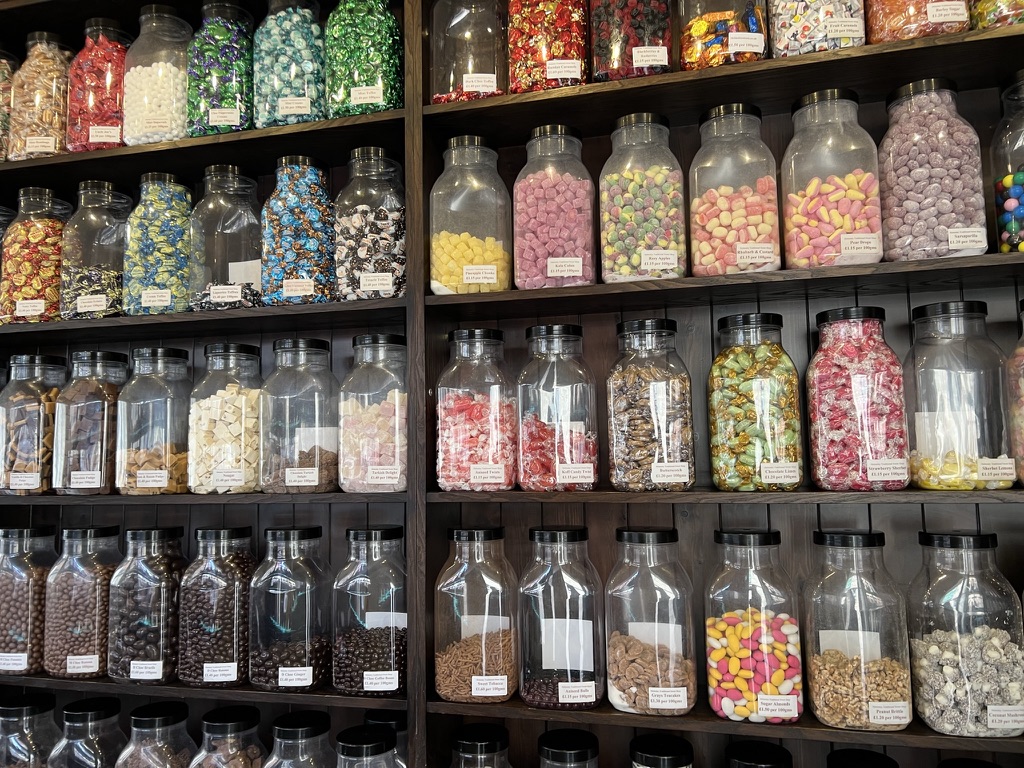
Whitby itself is a cute enough seaside town. Nary a vampire in sight—that I could tell, anyway. But for me, the drive there was the real highlight. From York, the first stop was Helmsley, a little picturesque market town. It’s so picturesque, there’s a famous spot to take a photo looking toward the town with Borough Beck (like a creek) in the foreground. Of course I took that photo—then spent most of my time in the Helmsley Traditional Sweet Shop.
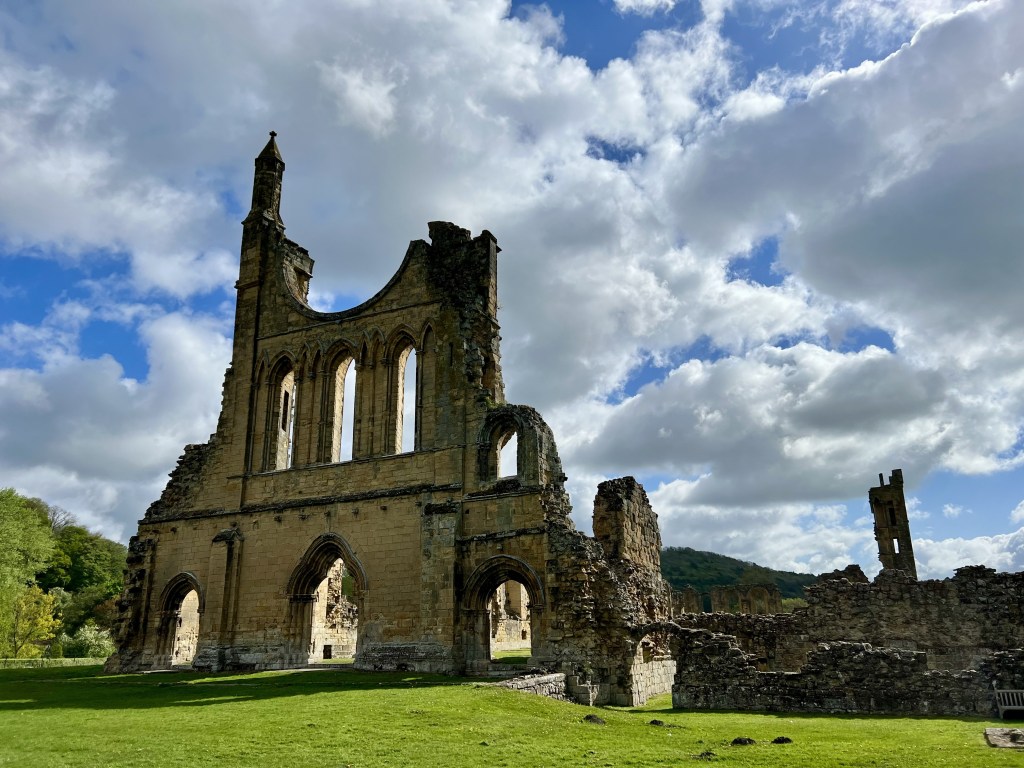
There was another stop at the ruins of Rievaulx Abbey. I didn’t know anything about the place when I was there. Just that something about it was beautiful. And a little hauntingly so. Like the hollowed-out shell left behind from some ancient living creature. The abbey was a Cistercian monastery founded in 1132 and seized by Henry VIII in 1538. And yet the remains of its mighty hall still stand, now carpeted with emerald-green grass; cerulean skies and cloud patterns for stained glass.
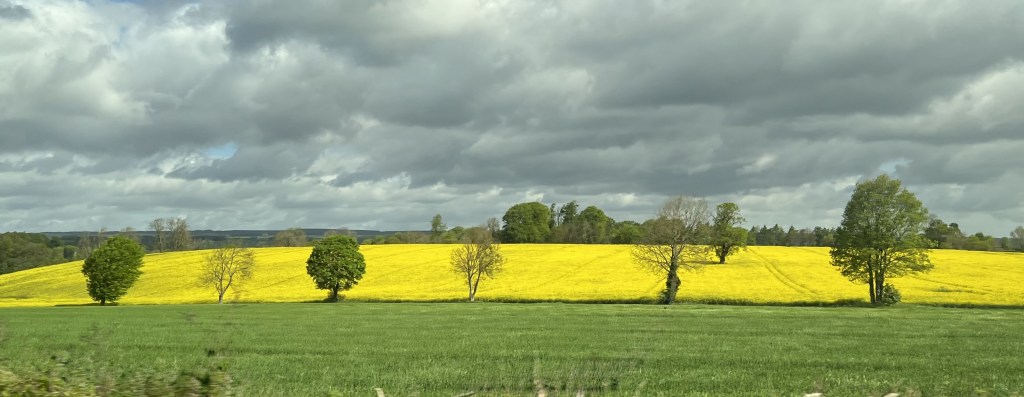
Brilliant yellow rapeseed fields ribboned along the route toward the moorlands. As hills became more prominent, the twists and turns through verdant farm properties became fewer and fewer. The trees began to disappear. The moors were near.
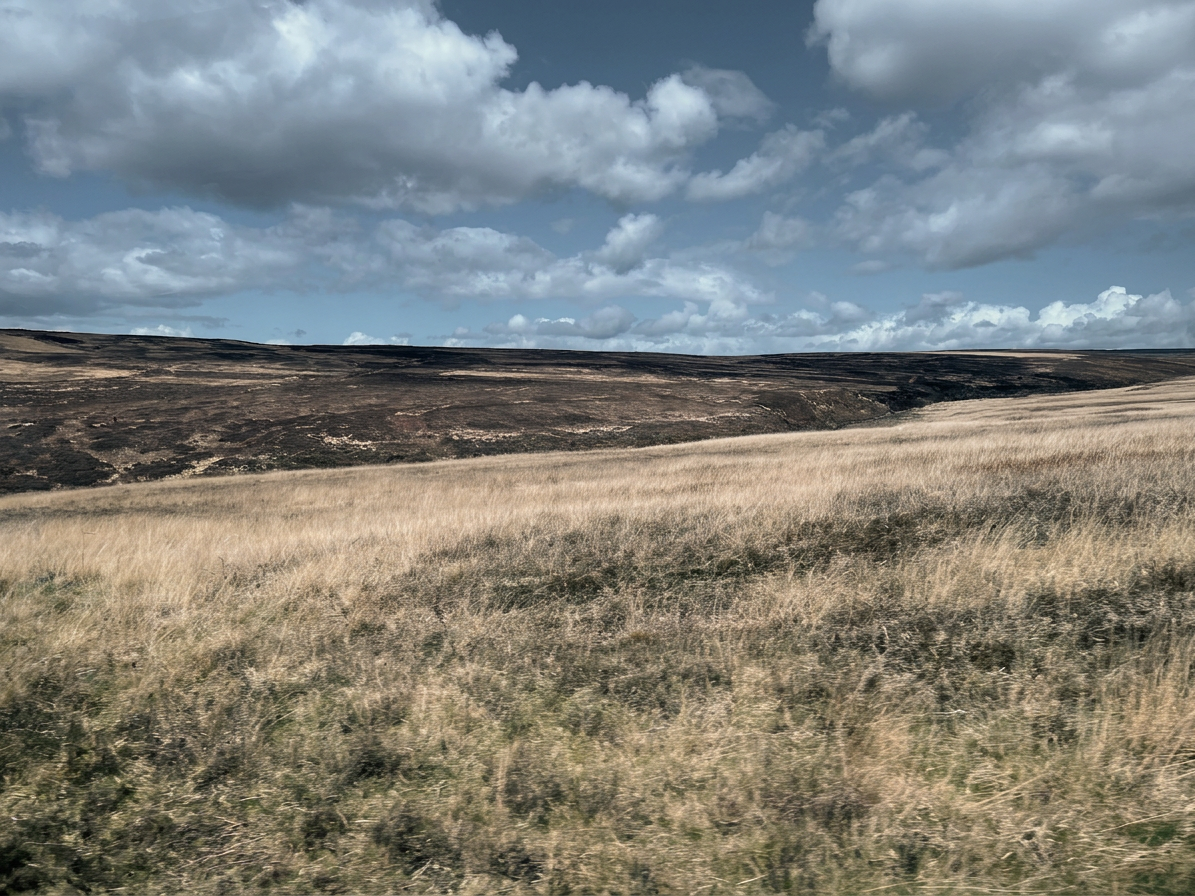
The Yorkshire moors are the backbone of Wuthering Heights, the setting of Heathcliff’s yearning and his mournful search for Catherine. I was there with spring’s pops of purple heather. Otherwise, it is a brown, treeless, raw landscape. It’s a windy and desolate place, and I could imagine how a person might lose themselves there in the melancholy—literally and figuratively.
I looked for Heathcliff and Catherine, but I did not find them.
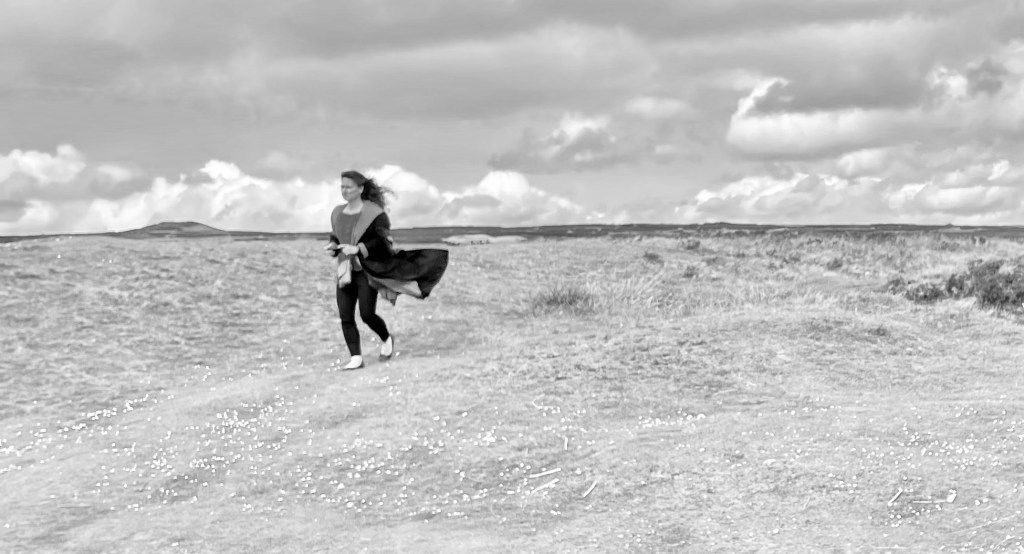
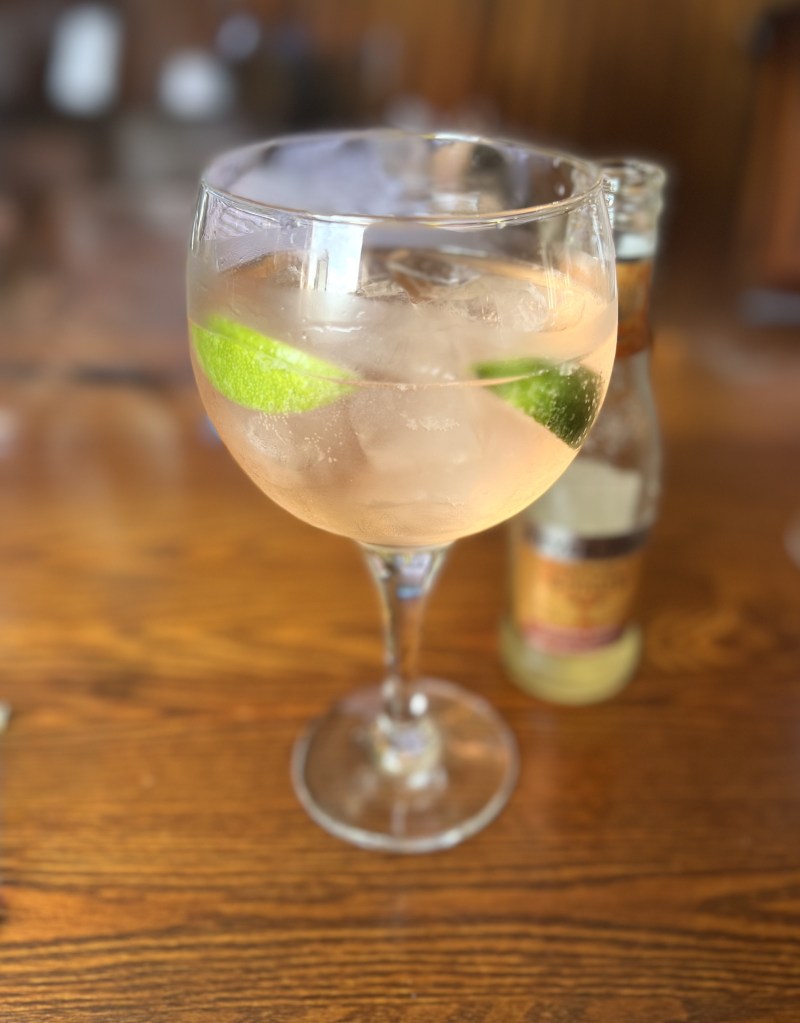
I’m pleased to report, however, that I did find many excellent gin & tonics throughout my time in York. And more than one qualified as perfect, so the mission was a success.