On the first day of 2nd grade, Mrs. Dickey asked our class if anyone would like to share about an interesting vacation trip they’d had over the summer. Hands shot up, and kids offered the fantastic destinations they’d visited: Myrtle Beach, The Warren Dunes, an aunt in Atlanta, a Magic Kingdom or two.
“Amy Martin, didn’t your family go somewhere interesting?” she prompted, as the vacation boasts dwindled.
Oh yes. It hadn’t occurred to me that not every eight-year-old had flown TAN SAHSA airlines to Tegucigalpa, Honduras, that summer.
My grandparents lived in Honduras for two years, serving as leaders to the students who migrated in and out of the Goshen College SST study abroad program. So, the summer of 1981, we went to visit them.
It’s important to understand that my family was not a hotel family. We camped. Didn’t matter where we were going or what the occasion might be, we either stayed with relatives or toted our digs behind the station wagon. So the fact that this trip began with an overnight stay at the American Inn outside Chicago so we could catch our morning flight out of O’Hare – well, that was something. With a rollaway wedged into a corner, all six of us could stay in one double double room, and there was a pool. I was in heaven.
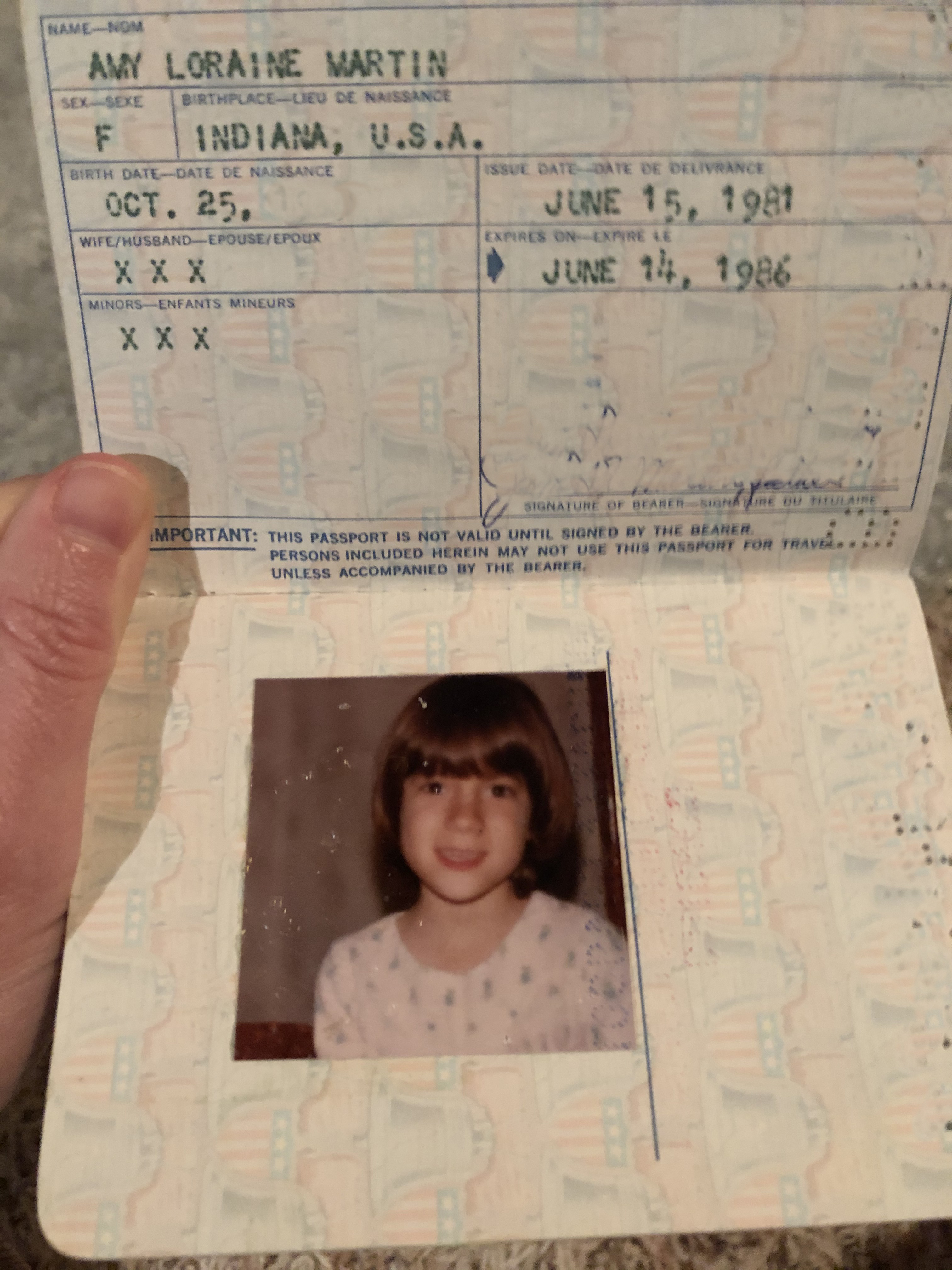
My first passport.
No surprise, it was my first air travel, though I don’t remember much about that, aside from my sister Beth having a doll and my baby sister Leah being oogled and coddled by the other passengers (I was jealous and annoyed), we wore our nice sundresses and cardigans, and we ate greasy sausages and eggs for a breakfast served mid-flight. I don’t recall much about the miracle of flight itself.
But this is about Honduras, not the American Inn outside of Chicago or TAN SAHSA airline.
These are the things that imprinted almost 40 years ago into my eight-year-old brain:
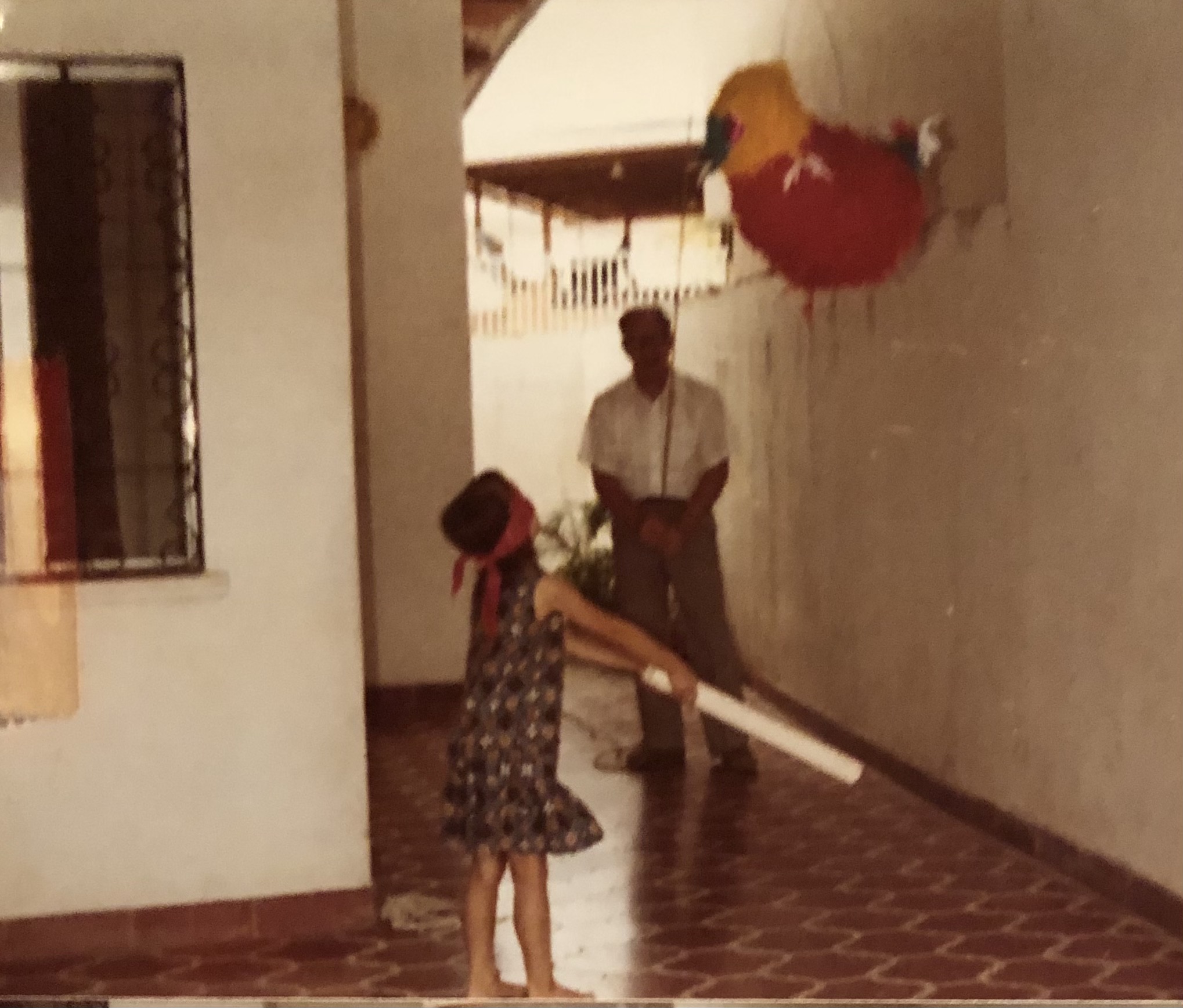
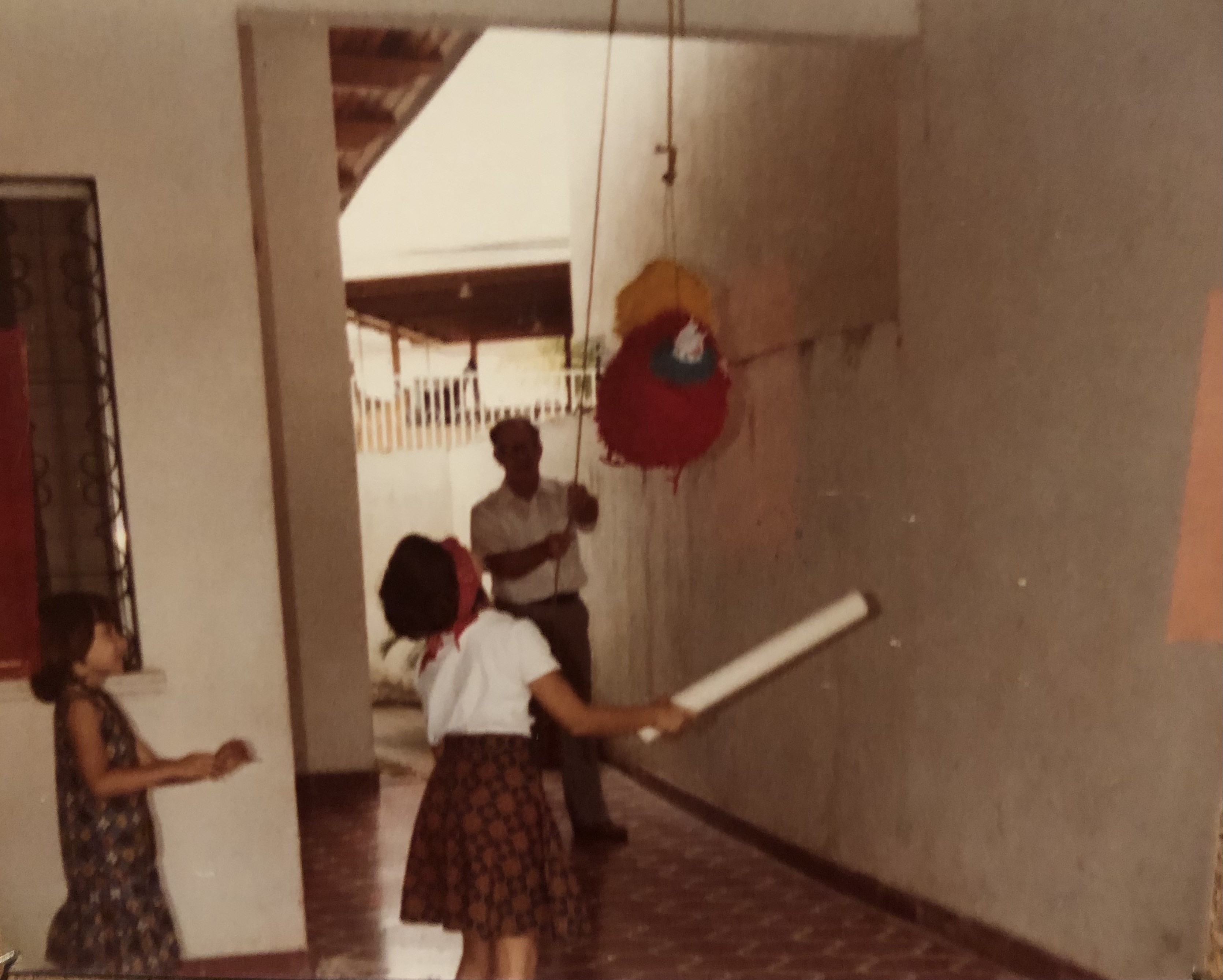
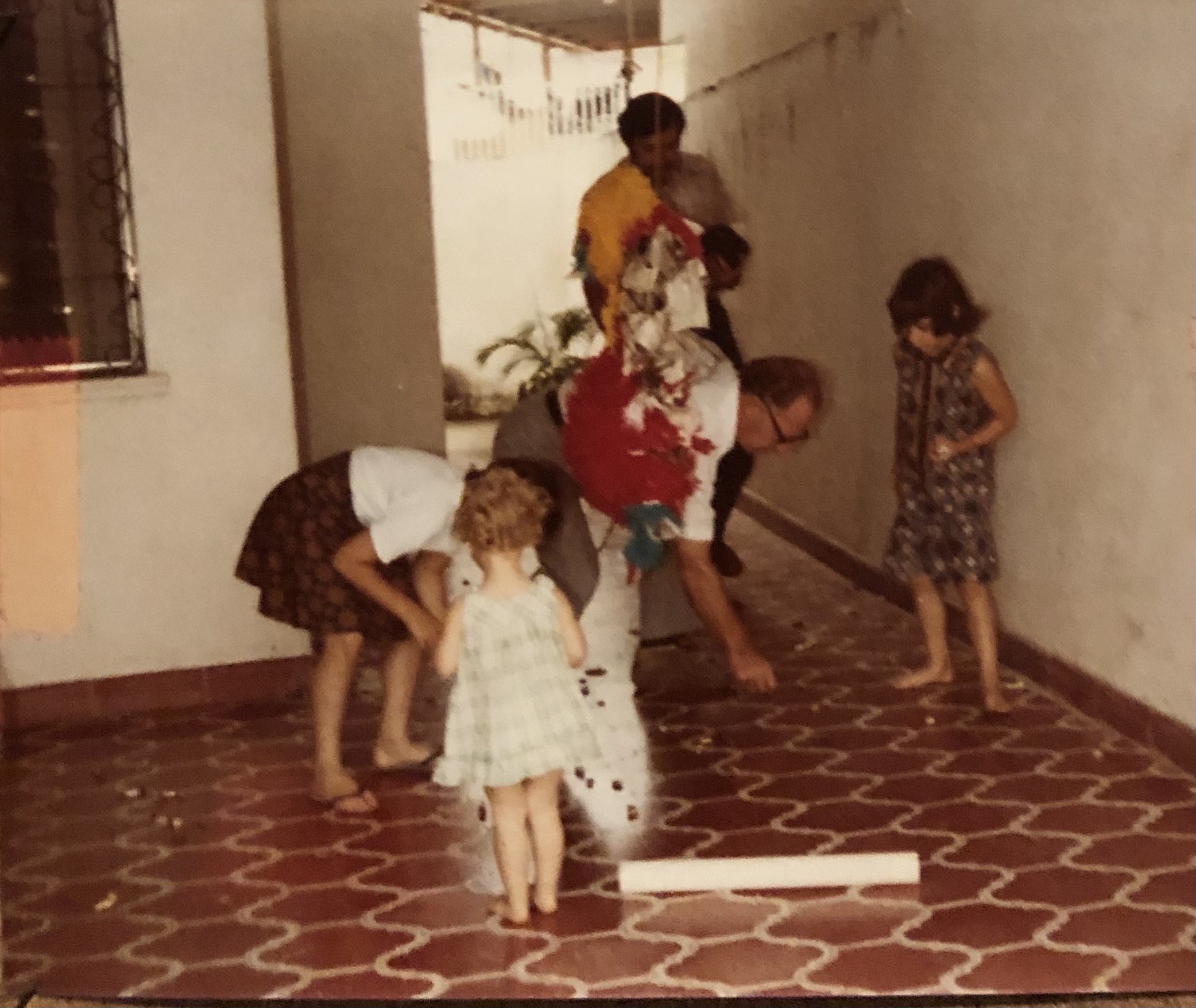
My grandparents’ house, which had a gate around it – and a carport where we skipped rope, swung blindfolded at a piñata Grandpa Weldy pulled up and down with a rope until one of my sisters hit it hard enough to explode the wrapped candy from its bowels, and where we sucked the not-too-sweet, pulpy coconut popsicles Grandma Weldy made for us.
My grandparents’ maid Carmen who kept the house, prepared meals with my grandmother, boiled drinking water for us and lived in a tiny building behind the house. My sister Eunice and I liked Carmen and her baby very much.
Taking care to not swallow water from the tap while brushing my teeth.
Visiting the market in the heart of Tegucigalpa, where the aforementioned piñata was purchased. This was the first open-air market I had ever experienced, and it felt dim and loud and crowded, the smell of human sweat and raw meat thickly mingled with dusty air. The delightfully horrifying sight of the raw meat itself, bloody torsos and legs hanging like curtains between stalls.
The man, who pushed his hand into the car window as he asked for some change. Just a centavo or two, please. I recall this moment – and it was just a moment – as startling, fascinating, awful and profoundly sad. And I can still vividly see his thin body and the faded blue, tattered rags he wore, his weathered skin and worn eyes, his mouth with just a few broken teeth exposed as he begged, please, just a little money.
The smell of leather and suede. We drove to a sort of sunny, grassy commune shop where people made a living making and selling handicrafts. Leather purses, straw hats, wall hangings. I can inhale now and imagine the smell inside little dark brown suede purse I was allowed to choose as a souvenir and kept for years.
The day we drove into the mountains and trekked high into a rain forest and up the many stone steps of an ancient monument. I think it was that same day we saw Nuestra Señora de Suyapa, Our Lady of Suyapa, and the Basilica in her honor. It seemed deserted and perhaps not yet finished, cool and dark inside, and the cement walls echoed in lively acoustics.
A lunch near a lake where we ate just-caught trout that had been roasted over a fire. A delicious, savory, nicely charred fish. Heads still on – another first for me – but no matter because it tasted good and there was ice, cold Nehi in any flavor for each of us to drink, straight from the bottle and with a straw.
The thick, wrapped maple-like sugar blocks Grandma Weldy bought from a roadside peddler. And sweet guava paste, paired with salty soft cheese. And Ting! soda my grandmother poured into small juice glasses for us to sip as the bubbles tickled our noses.
The weekend side trip to a house at Tela Beach where my Aunt Ruth taught us how to make drip castles in the sand. We bobbed in the waves and watched a cargo boat in the distance, presumably unloading bananas, as my father had launched into the Chiquita Banana jingle. My parents and Aunt Ruth pulling up sand dollars with their toes from the sandy ocean floor as everyone swapped jokes.
The day a rain cloud appeared over my grandparents’ house, and we discovered – running back and forth – that it was raining in the front yard, but sunny and dry in the back yard. Those things just didn’t happen in Northern Indiana.
When I think of Honduras, I see these all these things in my mind’s eye, and I think of the smell of people and dust and sunshine and leather.

